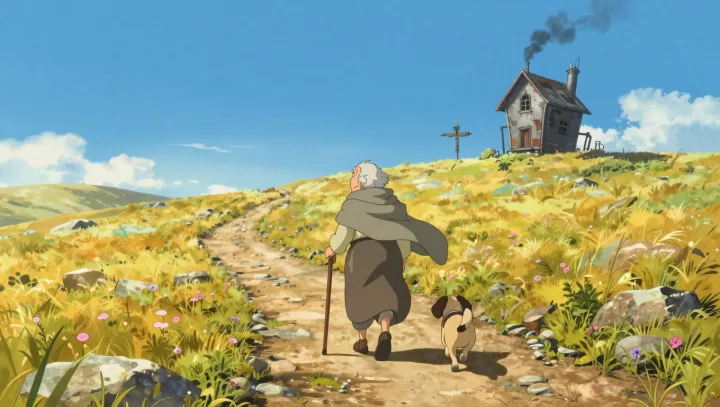
Wind in a Miyazaki film rarely behaves like a vague mood effect; it behaves like air with mass, pressure, and drag. Gusts shove characters off balance, loose cloth snaps along realistic vectors, and clouds shear and reform the way a fluid obeys the Navier–Stokes equations. The fantasy stays airborne because the atmosphere underneath it is built like a physics lab.
Miyazaki has long grounded his flying machines in readable aerodynamics. Wings flex under lift and turbulence, propellers bite into the air with visible torque, and every banking turn acknowledges centripetal force and inertia. Even the wobble of a glider follows something close to a real center of mass, giving the audience a subconscious sense of basic conservation of momentum. The result is that floating castles and impossible aircraft feel strangely trustworthy to the eye.
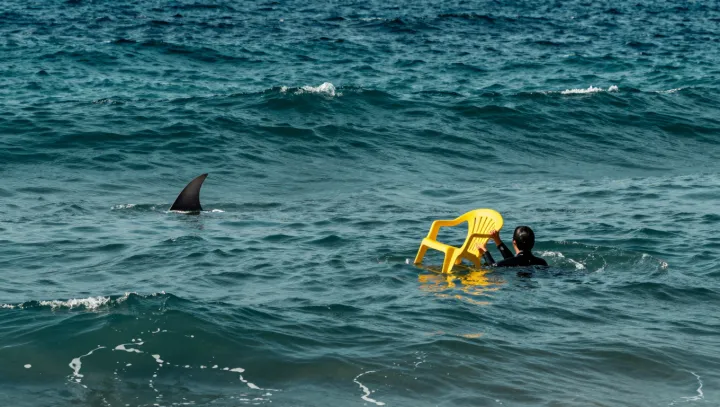
Water receives the same treatment. Waves crest and collapse with believable surface tension and viscosity, spray follows ballistic trajectories under gravity, and flooding scenes track how pressure equalizes between spaces. Animators study reference footage and technical diagrams, then exaggerate motion without breaking the underlying mechanics. By keeping entropy and energy in plausible balance, Miyazaki’s worlds can bend reality without ever quite breaking its rules.