
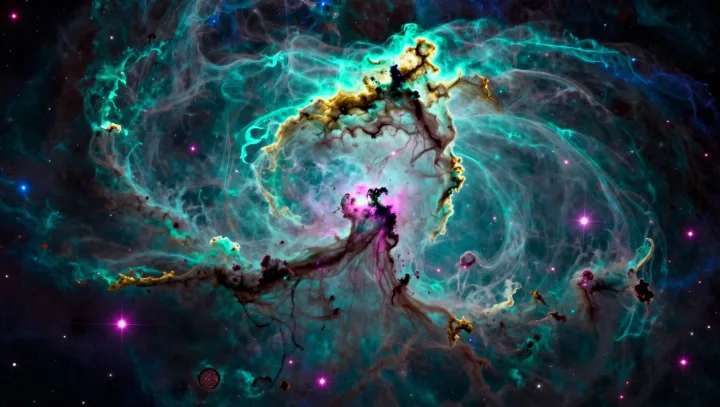
A galaxy filled with hundreds of billions of planets has delivered only silence to radio telescopes and space probes. That mismatch, known as the Fermi paradox, has turned from a casual question into a serious scientific puzzle about how life emerges and survives.
Modern surveys show that planets are nearly as common as stars, and that many orbit in so‑called habitable zones where liquid water could persist. Yet the Drake equation, which multiplies factors like star‑formation rate, biosignature probability and technological lifespan, admits an awkward outcome: even in a crowded galaxy, the expected number of detectable civilizations can still be near zero if the average broadcasting phase is short or if abiogenesis is extremely rare.
The silence also reflects the physics of signal detection and interstellar distance. Radio leakage fades below the noise floor after relatively modest ranges, lasers demand tight pointing, and spacecraft move at a tiny fraction of escape velocities needed for rapid galactic travel, so any contact scenario faces harsh constraints on energy and entropy. Some researchers argue that the apparent void is evidence of fragile technological phases that self‑terminate; others see it as a selection effect produced by immature instruments and a narrow search strategy, with only a sliver of the electromagnetic spectrum and sky systematically scanned so far.