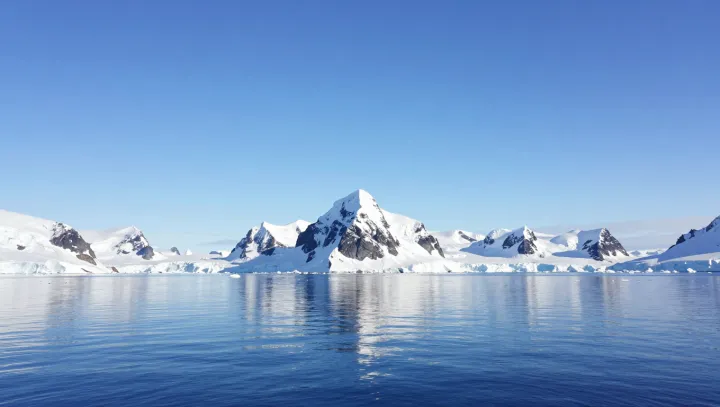
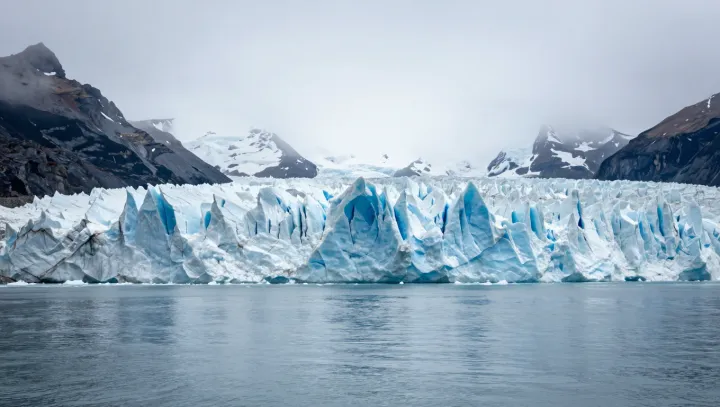
A glacier behaves less like a statue and more like a conveyor belt under stress. Its surface may appear locked, but inside, gravity loads the ice with such intense pressure that the crystals begin to deform, a process glaciologists call plastic flow, turning apparent rigidity into slow motion.
The key claim is blunt: solid ice can creep. Deep within the mass, shear stress and differential pressure force ice crystals to rotate, stretch and recrystallize, so the bulk material undergoes viscous deformation rather than shattering outright. Near the surface, where stress is lower and temperatures colder, the ice instead fractures, opening crevasses that mark zones where the upper layer cannot deform fast enough to match the internal flow beneath.
More radical is the idea that the glacier actually rides on its bed. At the base, pressure melting and friction generate a thin film of water, enabling basal sliding over rock. When that water is channelled or when subglacial sediments act as deformable till, the whole body can surge forward, a closed-loop interaction between melt, lubrication and motion that amplifies its cutting power.
The valley-carving claim is not poetic exaggeration. As the ice moves, it plucks blocks from the bedrock and drives rock fragments embedded in its base across the floor and walls, a mechanism known as abrasion. Over long distances, this grinding converts V-shaped river valleys into broad U-shaped troughs, with polished rock surfaces, striations and hanging tributaries as the measurable signature of a river made of ice.