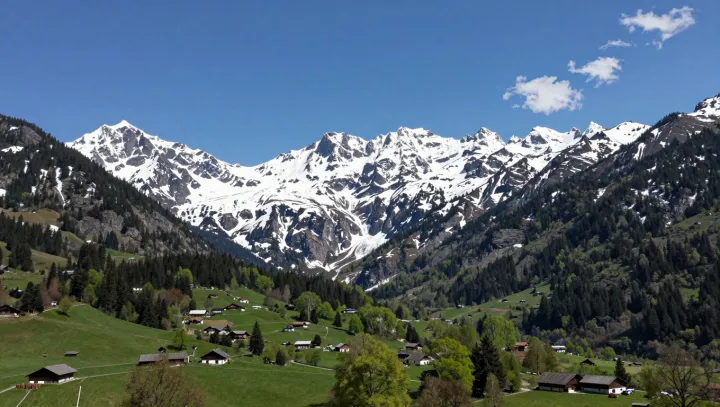
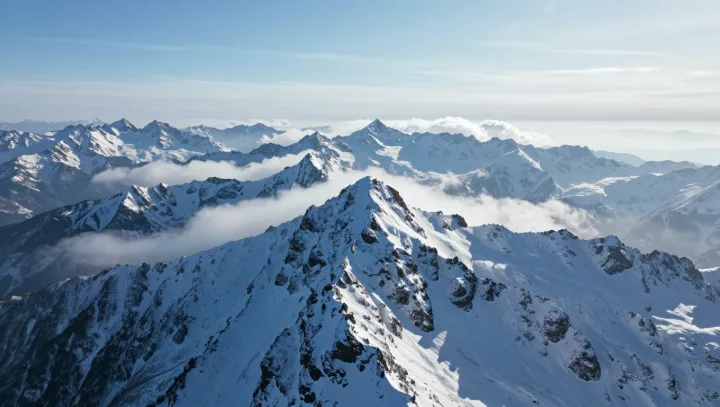
Snowy peaks mislead. The Alps are less a postcard and more a weather gate, swinging open to the Atlantic on one flank while slamming shut on the continental interior beyond. Moist westerlies hit this abrupt wall of rock, are forced upward in orographic lift, cool rapidly, and condense into dense cloud and heavy precipitation on the windward side.
What looks like a single mountain chain actually sorts air masses with almost bureaucratic efficiency, a kind of atmospheric customs line shaped by topography and thermodynamics. As air rises, latent heat release fuels cloud formation; by the time those air parcels crest the main ridge, much of their water vapor is gone. On descent, adiabatic warming under foehn conditions dries and warms the leeward valleys, producing lower relative humidity, sharper temperature swings, and a distinctly continental regime.
So the visual unity of the range hides two incompatible weather stories. To the north and west, frequent cyclones from the Atlantic meet a ready condensation machine, feeding lush vegetation and persistent cloud cover. To the south and east, the same chain builds a climatic moat, filtering storms, amplifying continentality, and carving Europe into two atmospheric neighborhoods that rarely play by the same rules.