
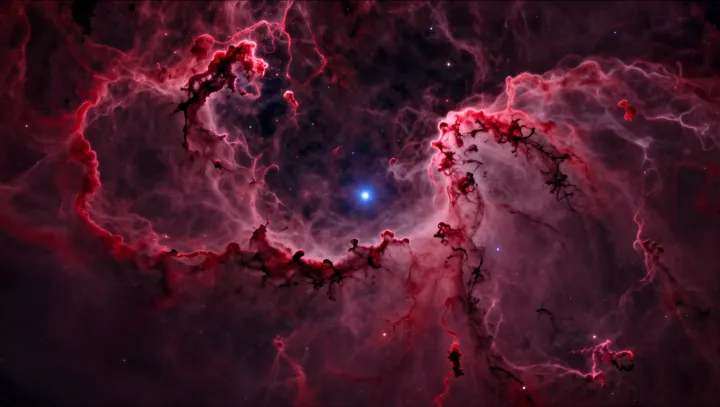
Exploring the vast Elephant Nebula where infant stars form
A cold, elephant‑shaped molecular cloud, dark in visible light, is quietly forming newborn stars as gravity crushes dense clumps until nuclear fusion switches on.
2026-04-20
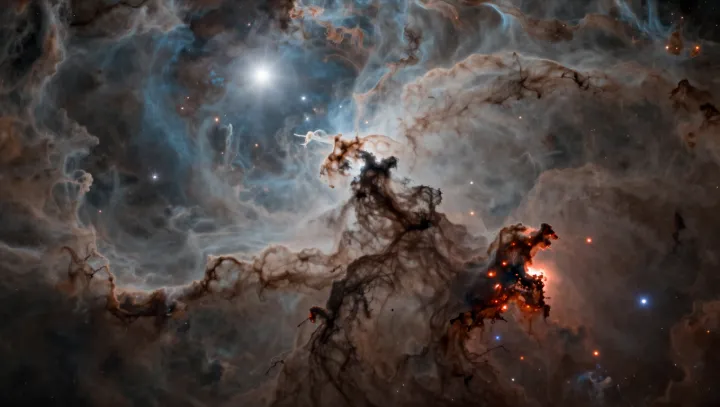
How an Orbital Telescope Sees Baby Stars
An orbital telescope uses ultraviolet and near‑infrared detectors, plus dust‑penetrating optics and digital processing, to reveal infant stars hidden in dusty clouds far beyond human vision.
2026-04-20
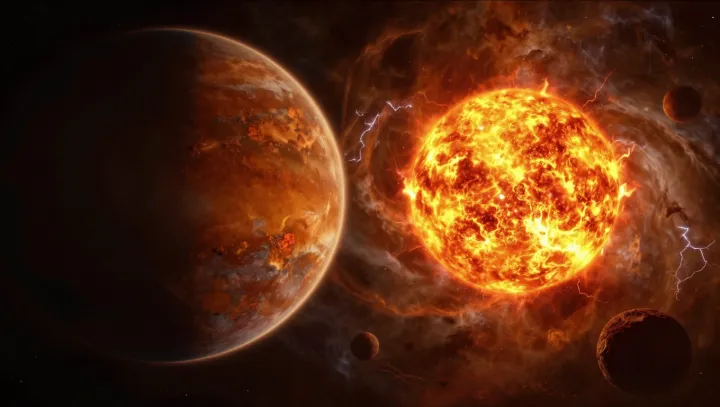
Why Dust Disks Did Not Die in the Sun
Planetary systems formed from drifting dust that should have fallen into their stars, but gas drag, turbulence and pressure traps let grains grow into planets instead.
2026-04-17

Why an almost empty universe beats all the sand
The observable universe can host more galaxies than grains of sand because matter is extremely sparse, cosmic volume is vast, and gravity organizes material into thin, clustered structures.
2026-04-17
Why a crowded galaxy sounds so quiet
Astronomers see a galaxy packed with planets yet no confirmed aliens. Detection limits, cosmic timescales and the Drake equation reshape what that silence means.
2026-04-17

The Quiet Physics Behind Twinkling Stars
Starlight appears to flicker not because stars change, but because turbulent layers of Earth’s atmosphere refract their light like an unsteady optical lens.
2026-04-17
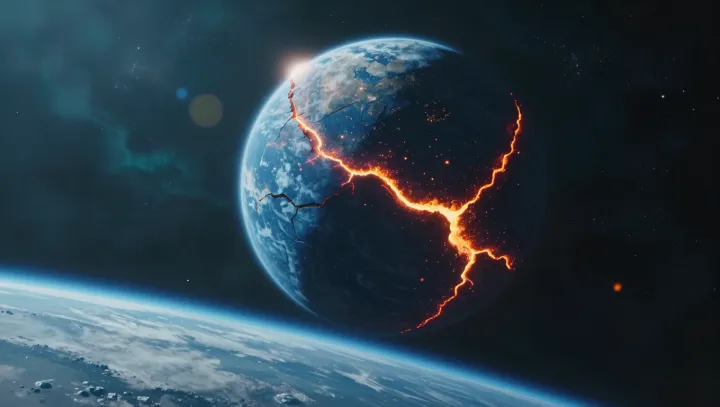
Rethinking the Big Bang as a Stretching Space
New cosmology work reframes the Big Bang as rapid expansion of spacetime itself, driven by general relativity and entropy, not a conventional explosion into preexisting space.
2026-04-15
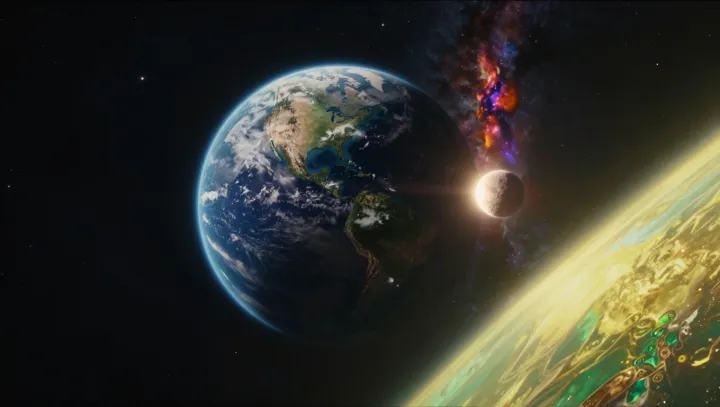
Voyager 2’s Quiet Link To A Violent Cosmos
Voyager 2 maintains contact across interstellar space using high‑gain radio links and Earth’s Deep Space Network, exposing how fragile our atmospheric and magnetic protection really is.
2026-04-15
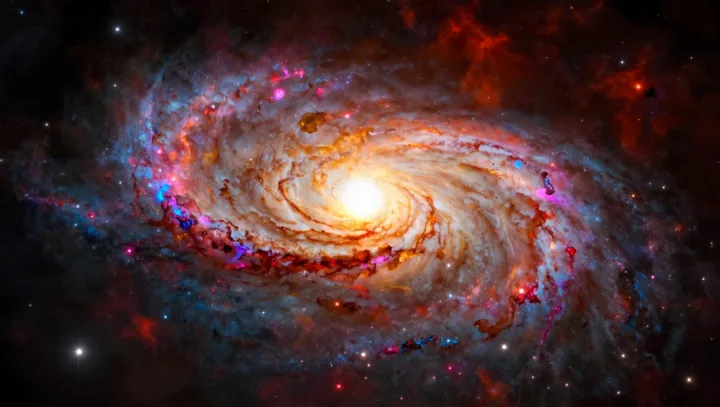
A billion Suns in one cosmic container
A galaxy cluster concentrates over a billion solar masses through gravity, dark matter and hot plasma, spreading that mass across a volume so large that light needs hundreds of millions of years to cross it.
2026-04-15
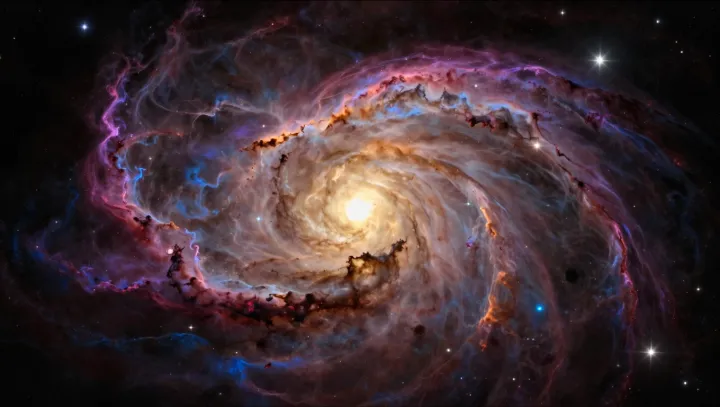
How Physics Reads the Edge of a Black Hole
Modern physics does not look inside a black hole; it reads radiation, gravity and quantum correlations at the boundary, where the event horizon acts as an information interface.
2026-04-14
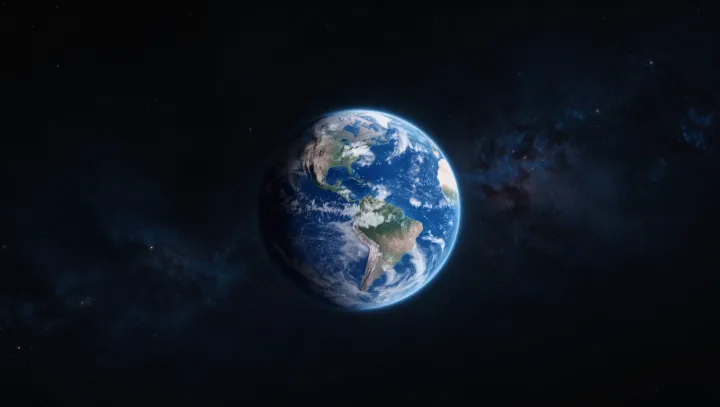
Earth’s Razor-Thin Habitability Zone
Earth sits in an unusually precise orbital and atmospheric balance that keeps surface water liquid and makes complex life physically possible.
2026-04-14
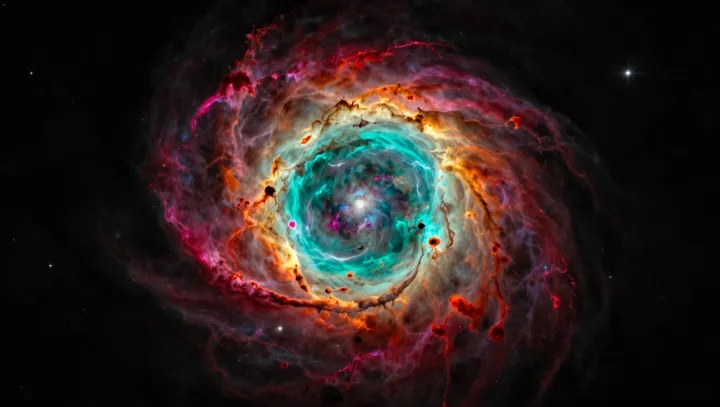
Why crowded galaxies still feel empty
Astronomers argue that even a Milky Way rich in intelligent life can keep spacefaring civilizations about 17,000 light-years apart, thanks to volume, low density, and harsh survival odds.
2026-04-14
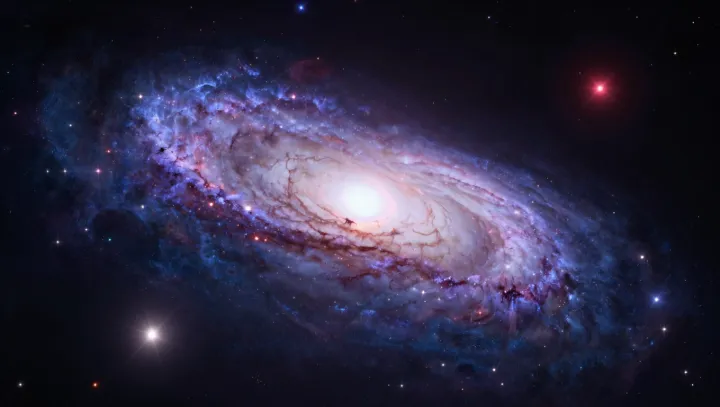
Einstein’s Equations And The Wormhole Trap
Einstein’s relativity admits wormholes on paper, yet energy conditions, quantum stability, and entropy argue that real spacetime almost never lets them form or stay open.
2026-04-15

The strange power of almost-empty space
Modern physics shows that even seemingly empty space is a dynamic field: quantum fluctuations, dark matter and dark energy shape light, atoms and galactic structure.
2026-04-13
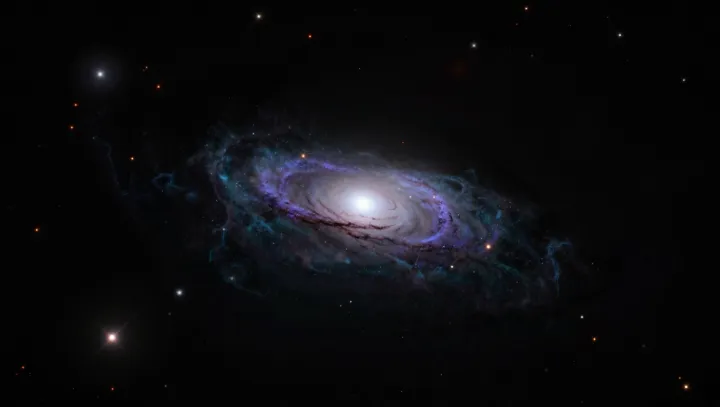
How a Tiny Galaxy Becomes a Light Giant
ESO 185-IG013 is a compact blue starburst galaxy whose extreme star-formation rate and dense stellar packing make it unusually bright in visible light.
2026-04-13

The Bullet Physics Of Microscopic Space Junk
Tiny fragments of orbital debris carry huge kinetic energy due to extreme orbital velocity, but their small size and low reflectivity keep them below current tracking thresholds.
2026-04-13
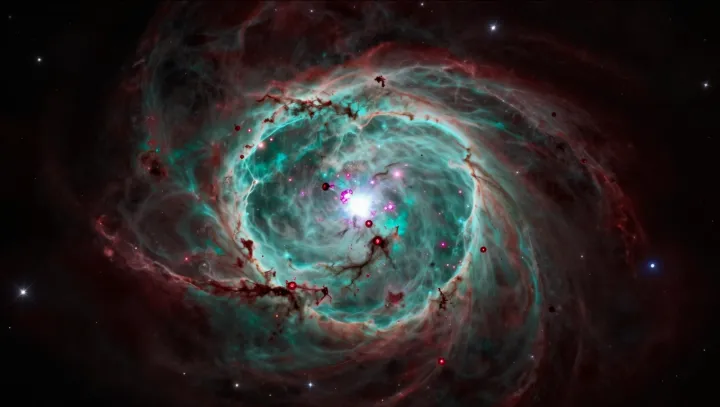
Is the Big Bang Just a Cosmic Bounce?
Physicists are exploring cyclic cosmology, where a prior universe collapsed in a low-entropy crunch and triggered the Big Bang as a new bounce.
2026-04-13
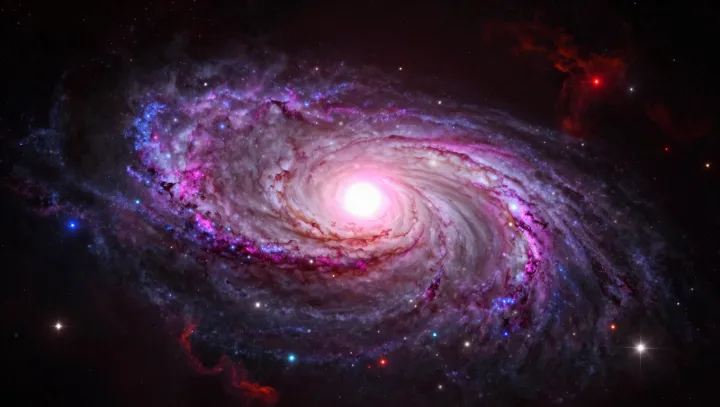
Why a Slow Asteroid Hits Like Thousands of Bombs
A pyramid‑sized asteroid, even at sub‑bullet speed, stores huge kinetic energy due to its massive mass, converting that energy into heat, shock waves and atmospheric blast on impact.
2026-04-16
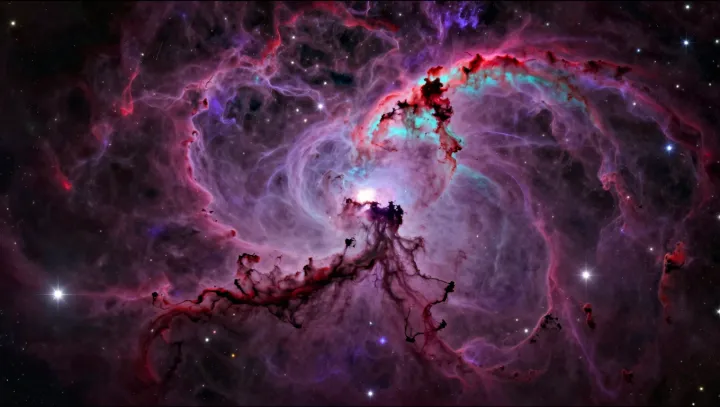
Inside the Milky Way’s Packed Stellar Core
Astronomers map the Milky Way’s central parsec, revealing a hyper‑dense stellar city where gravitational interactions and radiation fields reshape how stars live and die.
2026-04-17
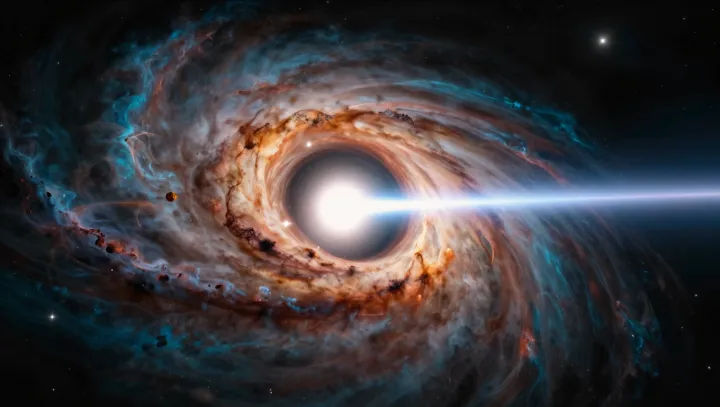
The case of the missing exoplanet
One candidate exoplanet fades from view while nearby Fomalhaut b follows a distorted path, prompting debate over whether both objects are unstable dust clouds rather than solid worlds.
2026-04-10