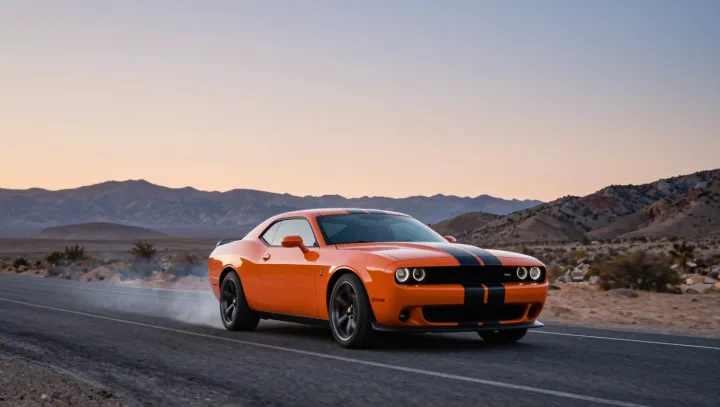
An affordable commuter coupe once dismissed as a “secretary’s car” now runs quarter‑mile times once reserved for exotic machinery. The transformation from mild runabout to 5.0‑liter V8 benchmark tracks shifts in engineering, regulation, and performance culture inside the mass‑market auto industry.
Early versions prioritized low purchase cost, simple unibody construction and modest displacement to minimize fuel consumption and insurance premiums. As consumer demand for performance rebounded, engineers leveraged existing rear‑drive architecture, stiffened suspension geometry and improved weight distribution to support larger displacement blocks. The move to electronically controlled fuel injection and advanced ignition timing allowed higher compression ratios without detonation, raising both horsepower and brake mean effective pressure while maintaining emissions compliance.
Powertrain teams then paired the 5.0‑liter V8 with close‑ratio gearboxes, limited‑slip differentials and refined traction control algorithms, translating crankshaft torque into usable longitudinal acceleration. Wider tires and multi‑piston brake calipers closed the loop, enabling repeatable launches and shorter stopping distances. Brand managers amplified the engineering gains by anchoring the car in motorsport imagery and enthusiast communities, converting incremental upgrades in power‑to‑weight ratio into outsized cultural capital. The result is a car that, while still priced for mainstream buyers, can out‑accelerate many sports models positioned as aspirational luxury hardware.
In the glow of dashboard lights and the rhythm of an idling 5.0‑liter V8, the once‑ordinary coupe now reads less like basic transportation and more like a rolling commentary on how mass production can quietly bend performance expectations.