
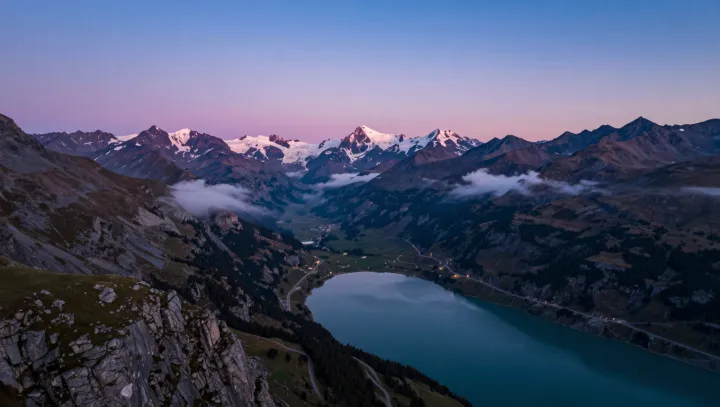
A narrow strip of asphalt above two thousand six hundred meters now carries cars and hoofprints in the same day. The high pass in the Italian Alps stays open, yet functions as a wildlife corridor, because engineers and ecologists treated the road more like a perforated membrane than a barrier.
Traffic is capped, slowed, and timed so that vehicle flow resembles a low baseline metabolic rate rather than a spike of disturbance. Speed limits, seasonal restrictions, and bans on night lighting reduce noise, glare, and collision risk, keeping the effective entropy of the landscape from rising as asphalt moved in. Cameras and GPS telemetry map where ibex and chamois still attempt to cross, guiding where the structure must flex.
Instead of one continuous wall, designers inserted a sequence of underpasses, open viaduct spans, and snow galleries raised on columns, leaving ledges and scree slopes intact so animals can move along traditional altitude gradients. Runoff is captured in culverts and retention basins, then released through sediment traps back into alpine peat and fen systems, preserving hydrological connectivity and wetland nutrient cycles. The marginal effect of each added culvert or bridge is small, but together they keep the pass legible as habitat rather than pure infrastructure.