
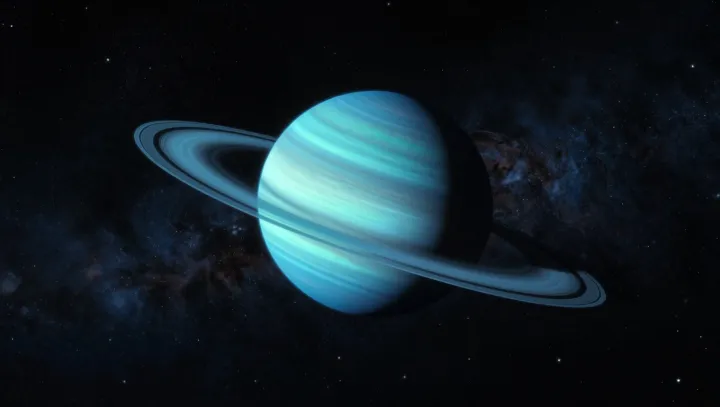
Diamond rain stops being fantasy once gravity and pressure reach planetary scale. Deep inside the atmospheres of gas and ice giants, simple hydrocarbons are squeezed so intensely that carbon atoms snap into a crystalline lattice and start to fall as solid diamonds.
Planetary scientists describe this as a phase transition driven by thermodynamic equilibrium: methane and other hydrocarbons are broken apart, carbon is liberated, then reorganized into diamond under immense pressure and temperature. Shock-compression experiments and high-pressure cells simulate these conditions, tracking changes in crystal structure and optical properties that match the predicted formation of diamond. As the new crystals grow, they act as dense condensates in a convecting fluid, accelerating downward through layers of hydrogen and helium.
The result is a strange kind of mineral meteorology, where precipitation is governed not by water vapor but by carbon chemistry and the entropy of a deep, hot envelope of gas. As the diamonds sink, they may eventually dissolve or transform again in even harsher layers, turning an apparently extravagant image into a routine step in a planet’s long, quiet redistribution of energy and matter.