
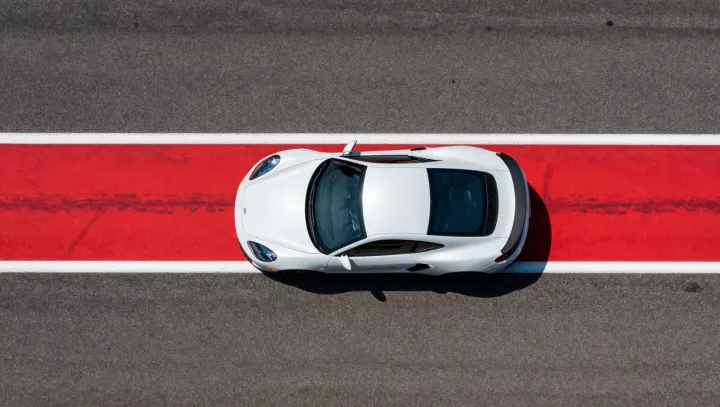
A mature platform turns the GT-R into a repeatable physics experiment that still embarrasses many newer exotics in a straight line. Instead of rebooting the car, engineers kept mining the same chassis and powertrain for more usable thrust off the line and through real-world corners.
The core trick is control of traction and torque delivery rather than a headline power spike. With a transaxle all-wheel-drive layout, the car can push more torque to the pavement before reaching the friction limits of the tires, exploiting basic Newtonian mechanics. Continuous refinement of launch control, stability control algorithms, and torque vectoring lets the car approach the boundary of available grip with less wheelspin and less wasted energy.
Aerodynamic drag coefficient and cooling airflow have also been tuned instead of rebuilt. Small changes to front splitters, underbody panels, and ducting cut drag and improve high-speed stability without adding mass. Incremental gains in turbocharger efficiency, intercooler heat exchange, and engine management raise effective volumetric efficiency and maintain repeatable boost. By iterating on a known set of constraints, engineers avoid the development entropy that comes with clean-sheet designs, turning evolutionary tweaks into an enduring performance edge.