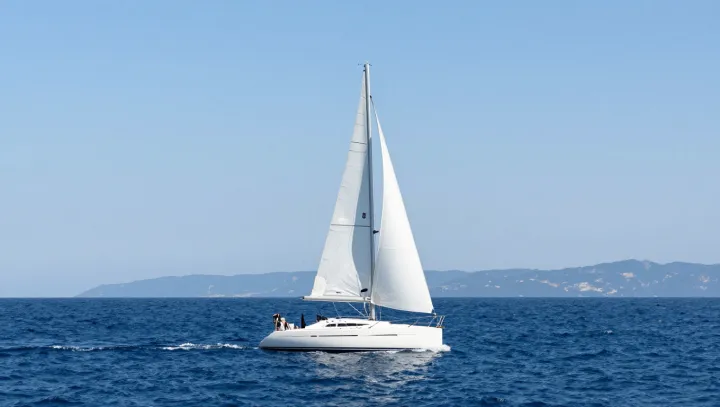
A price tag above half a billion dollars now shadows a single America’s Cup campaign, because the contest has evolved into an engineering experiment as much as a sailing event. The boat becomes an R&D platform where hydrodynamics, aerodynamics and computational modeling collide to extract marginal gains that decide the trophy by meters, not miles.
The foiling yacht effectively functions as a low-altitude aircraft that happens to touch water, with lift, drag and Reynolds number calculations driving every design choice. Teams run iterative simulations using computational fluid dynamics, then feed sensor streams into machine-learning models to refine control systems and crew decision-making. The result is a floating laboratory where every gram of composite material, every angle of a foil, and every line of control software is tested against the hard limit of fluid mechanics and human reaction time.
That scale of experimentation demands budgets closer to aerospace programs than traditional sport, as sponsors treat the campaign as a technology incubator as well as a branding exercise. Proprietary algorithms, materials research and systems integration create a technical moat that can outlast a single regatta. On the water, what looks like a boat race is in fact a live-fire systems test, with victory awarded to the team that best converts capital into validated data and usable performance intelligence.