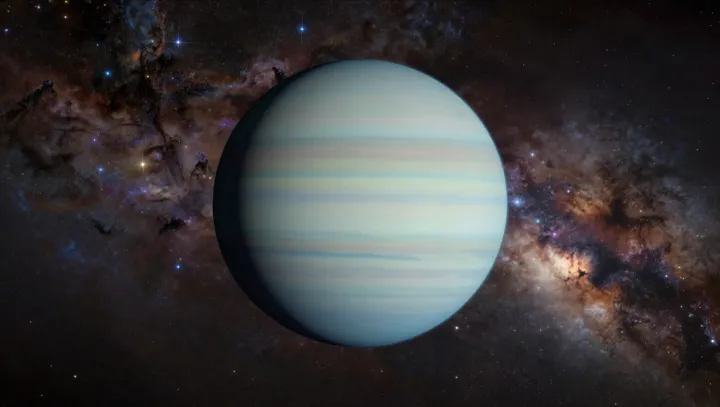

Starlight that seems to blink overhead stays almost perfectly steady at its source. The apparent flicker is generated much closer to home, as Earth’s atmosphere reshapes the beam on its way to the ground.
Columns of air with different temperatures and densities act as a shifting optical lens. As starlight passes through these turbulent layers, small pockets of air change the local refractive index and bend the incoming rays. This process, known in physics as atmospheric refraction, redirects light by tiny angles many times before it reaches a telescope or naked eye. The result is rapid variation in brightness and position that the human visual system interprets as twinkling.
The effect grows stronger for stars near the horizon, where light travels through a longer path of unstable air and encounters more refractive cells. By contrast, planets appear steadier because their apparent disks average out these fluctuations. The same optical turbulence that makes stars sparkle also degrades angular resolution for ground-based telescopes, prompting observatories to use adaptive optics and wavefront correction to counteract the atmosphere’s restless lens.