
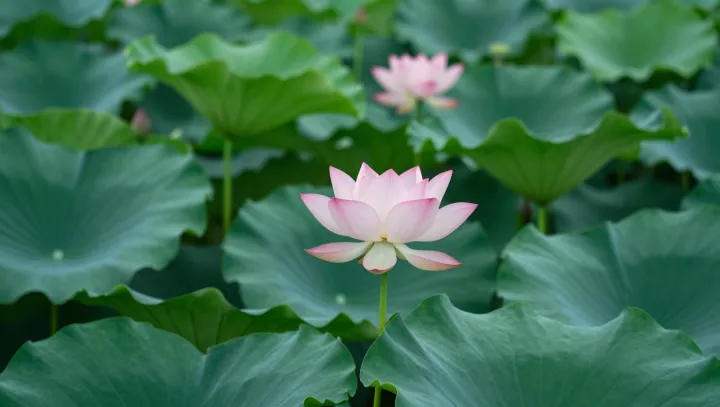
A still pond becomes a physics lab when a lotus leaf breaks the surface. What looks like a flat green disk is a finely tuned interface between muddy water, air and sunlight, built to keep both parasites and dirt at bay while the rest of the plant stays buried in sludge.
The leaf’s famous self-cleaning effect rests on micro‑ and nanoscale papillae coated in a hydrophobic cuticle. Water beads up, amplifying surface tension and contact angle, then rolls off like a tiny conveyor belt that carries dust, spores and bacteria away. By outsourcing hygiene to fluid dynamics instead of metabolic work, the plant protects photosynthesis and reduces its effective entropy increase in a hostile, low‑oxygen environment.
The flower adds a different hack: thermogenesis. Specialized tissues ramp up mitochondrial respiration, lifting floral temperature well above ambient water and air. The blossom becomes a localized climate zone, broadcasting scent molecules faster and giving visiting insects a thermal reward that subtly alters their behavior and pollination routes. In an ecosystem where convection is weak and diffusion is slow, the lotus effectively writes its own micro‑weather, turning stagnant water into a controllable operating system for survival and reproduction.