
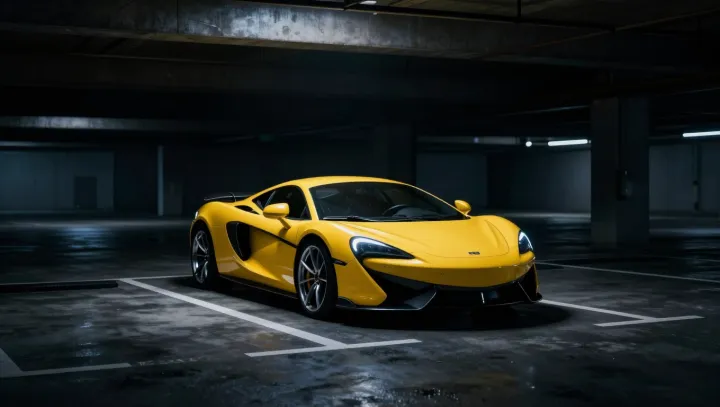
A modest sports car with a price tag near the cost of a family appliance can feel more vivid on public roads than an exotic supercar idling at a fraction of its capability. The reason lies in how often the car reaches its usable performance envelope under real traffic, speed limits and surface conditions.
On a typical road, legal speeds and friction limits mean the absolute power of a supercar rarely converts into longitudinal acceleration for more than a brief burst. Traction control, aerodynamic drag and braking distance become binding constraints. The driver spends most of the time modulating a sensitive throttle to avoid wheelspin, stability control intervention or license‑ending speeds, so the powertrain’s potential energy remains largely theoretical.
A lighter, lower‑power sports car with balanced weight distribution can be driven closer to its grip threshold more of the time. Mechanical grip, slip angle and steering feedback operate nearer their upper bounds without breaching legal speeds. This increases sensory input through the steering rack, seat and chassis, and demands continuous micro‑corrections that engage motor learning and proprioception. The marginal utility of each extra horsepower falls sharply beyond this point, while chassis communication and predictable weight transfer dominate perceived fun.
Because the accessible car allows frequent use of full throttle, higher engine revs and sustained cornering loads, the driver experiences more cycles of cause and effect between inputs and vehicle response. That feedback loop deepens perceived control and flow, even though any data logger would show lower peak speed, lower lateral g and slower lap time than the supercar on a closed circuit.