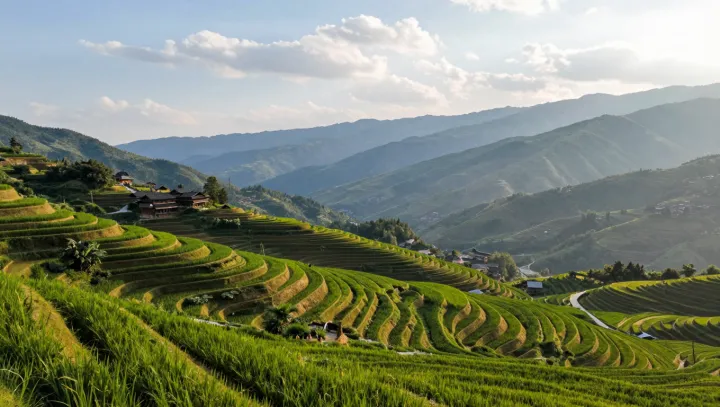
Water, not willpower, is the real architect of Longji. Channels run like veins, cut along contours so gravity, not pumps, does the work, turning steep slopes into a cascading hydraulic device that meters flow field by field instead of drowning the valley in flash floods.
The harder truth is that Longji is less scenery than civil engineering. Farmers stacked dry-stone retaining walls, locking angular rocks so friction and weight replace concrete, then packed clay and organic matter behind them to build a soil profile thick enough for roots yet porous enough to avoid hydrostatic blowouts during heavy rain.
Equally radical is the way they refused straight lines. Every terrace lip tracks the contour, lengthening the path of runoff to slow kinetic energy, cut shear stress and curb erosion, while the shallow flooded layer acts as a thermal buffer and nutrient reservoir that stabilizes rice growth despite brutal altitude shifts within a single slope.
Least visible, and most decisive, is governance. Communal rules assign water turns, repair duties and planting calendars, creating a closed-loop maintenance system in which every broken wall threatens a neighbor’s harvest, so social pressure substitutes for machinery and keeps this mountain-scale food apparatus quietly running.