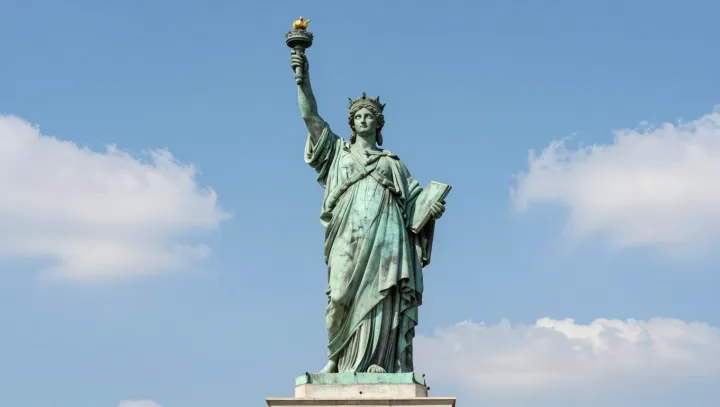
That famous green glow on the Statue of Liberty began as bright metallic copper, then quietly surrendered to the atmosphere. Exposed copper does not stay decorative for long; it is driven by thermodynamics toward lower energy states as its surface reacts with the air around it.
At first, oxygen molecules attack bare copper, forming copper oxide in a thin, dark film. As water and carbon dioxide diffuse through that layer, they trigger further reactions that build copper carbonate and basic copper sulfate. Add sulfur dioxide and chloride ions from polluted urban air and marine spray, and the surface chemistry shifts again, assembling the complex copper salts we simply call patina.
This patina is not cosmetic but structural, a textbook case of passivation. Once formed, it dramatically slows further electron transfer between copper and corrosive agents, lowering the effective corrosion rate and acting as a barrier coating. The color change from warm brown to dull green marks the completion of that chemical feedback loop: the metal reacts, the patina grows, and the new skin in turn regulates every reaction that follows.