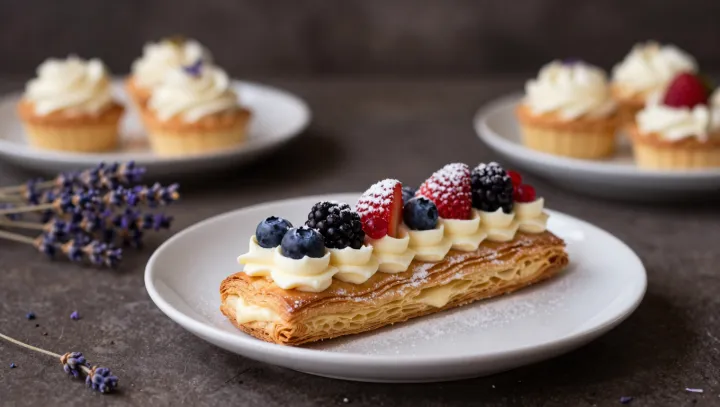
A plain pastry bag is starting to behave like a low-tech 3D printer, and the code is written in six small moves: angle, pressure and temperature, repeated with discipline. Instead of relying on molds or plastic stencils, high-precision whipped cream now comes from understanding how the foam flows the moment it leaves the tip.
Behind the aesthetic is fluid dynamics. Whipped cream sits at a narrow band of viscosity where a slight shift in nozzle angle changes shear stress and therefore the sharpness of each ridge. Holding the bag perpendicular to the surface maximizes vertical lift, while a shallow angle stretches the stream into controlled arcs. Constant hand pressure keeps volumetric flow rate stable; micro-pulses of force create dot matrices and beaded borders that mimic machine-laid filaments.
Temperature becomes the quiet regulator of this system, working like a real-time calibration of yield stress. Colder cream maintains bubble integrity, so edges stay crisp instead of slumping under gravity. A few degrees warmer and the same pattern blurs as fat networks relax. By rotating these three variables across six repeatable tricks, decorators can stack rosettes, braids and latticework with tolerances that begin to resemble additive manufacturing, while still dissolving on the tongue instead of on a build plate.