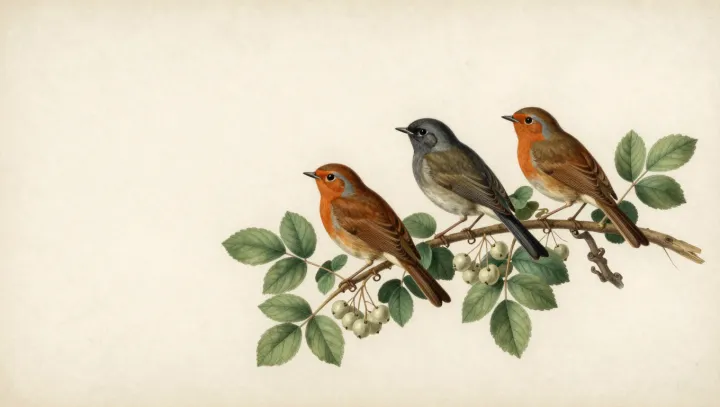
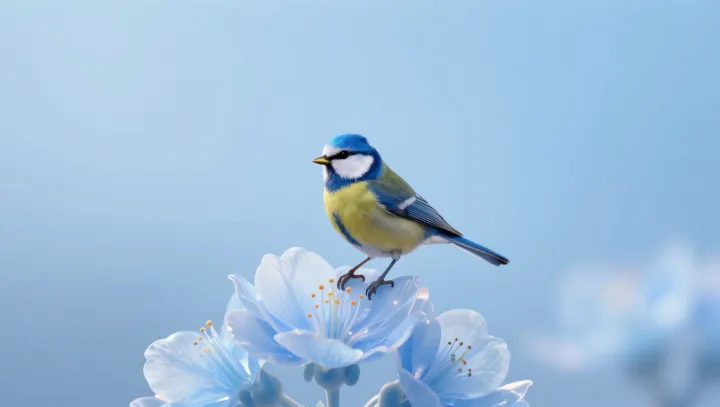
Feathers that look merely bright to human eyes can blaze with hidden signals in a bird’s own vision. The reason sits at the intersection of sensory hardware and feather micro‑engineering, where physics and biology quietly expand the visible spectrum.
Many birds are tetrachromats: their retinas host a fourth type of cone cell tuned to ultraviolet wavelengths. Human color perception is built on three cone classes and a trichromatic color space, which compresses spectral information into fewer dimensions. In birds, ultraviolet‑sensitive cones, combined with specialized oil droplets that act like built‑in optical filters, create additional axes of color contrast. A patch of plumage that seems like a single hue to a human becomes a complex gradient across this enlarged perceptual space.
Feather structure then exploits this sensory capacity. Microscopic keratin and air nanostructures produce structural coloration through coherent light scattering, while melanin granules tune interference patterns. Some feathers also modify polarization state, layering another channel of information onto existing hue and brightness. These physical mechanisms, operating within the constraints of electromagnetic spectrum and wave optics, generate subtle ultraviolet and polarization patterns that remain invisible to humans yet highly legible to birds during mate choice, species recognition and signaling. The most spectacular bird is, for another bird, even more elaborately encoded.