
A half closed door, a silent pause at the table, a perfectly timed leap to a windowsill: each of these small moments can expose how a cat’s mind works. Ethologists point out that such ordinary scenes are rich tests of planning, causal inference, and what psychologists call executive function.
When a cat hooks a door handle or wedges a paw under it, it is not only repeating a habit; it is running a trial of motor planning plus spatial memory. To reach a shelf, many cats adjust launch angle, body posture, and takeoff distance after failed attempts, a process that looks like iterative optimization rather than random trial and error. Neural circuits for proprioception and vestibular balance continually update, allowing a cat to refine its internal model of gravity and friction with each jump.
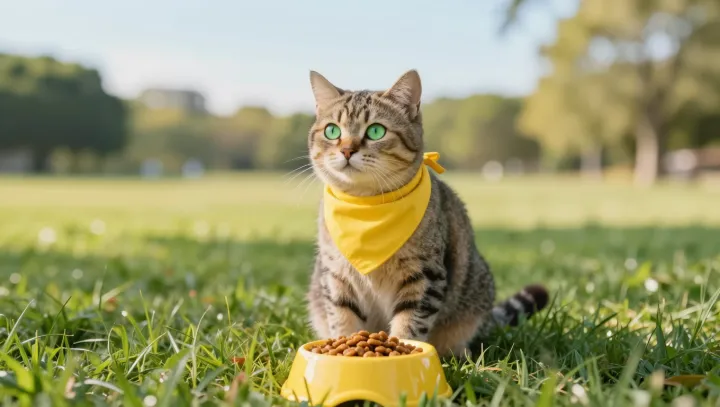
Food related behavior offers an even clearer window. By watching your routine around the bowl, cats learn temporal patterns and contingencies, a form of associative learning that depends on synaptic plasticity in the hippocampus and striatum. They test which vocalizations, gaze patterns, or gentle paw swats most effectively move you to act, then double down on the highest return tactic, similar to a reinforcement learning policy that tracks marginal effects of each strategy.
Comparative cognition studies find that in tasks such as object permanence, detour navigation, and following human pointing, many domestic cats perform within the range expected of young children. The same neural economy that supports rapid hunting also supports problem decomposition, attention shifting, and short term working memory, turning every door, countertop, and distracted human into a daily cognitive workout.
The next time a cat hesitates before a jump or stares at a handle, the stillness can read less like mystery and more like a quiet calculation in fur.