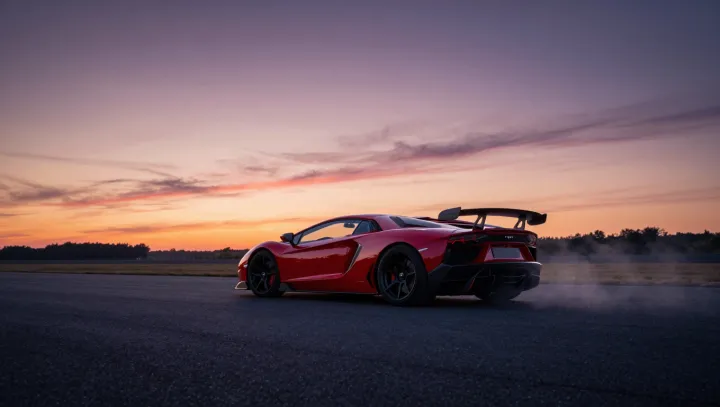
A compact mid‑engine chassis first carried a modest 1.8‑liter four‑cylinder, prioritizing low mass and mechanical grip over outright power. That early Exige treated horsepower as just one variable in a simple equation: keep curb weight down, keep driver input unfiltered, let the stopwatch reveal the truth.
Over successive iterations, Lotus enlarged the performance envelope not by abandoning that lightweight philosophy, but by stress‑testing its limits. Aerodynamic downforce increased, tire contact patches widened, and structural rigidity climbed, pushing the car’s power‑to‑weight ratio into territory once reserved for thoroughbred supercars. The key step change came with the adoption of a supercharged V6, whose forced induction and improved thermal efficiency altered the basic powertrain architecture without erasing the Exige’s track‑tool identity.
As electronic driver aids, dual‑clutch gearboxes and drive‑by‑wire interfaces became the industry’s default entropy, the Exige Final Edition chose a narrower path. It pairs the most potent version of that supercharged V6 with a manual transmission and hydraulic steering, preserving tactile feedback even as output climbs. In economic terms, the marginal utility of extra power eventually collides with the diminishing returns of analog control; the Final Edition freezes that intersection in metal and carbon, marking both the performance peak of the nameplate and the closing bracket on Lotus’s purist era.