
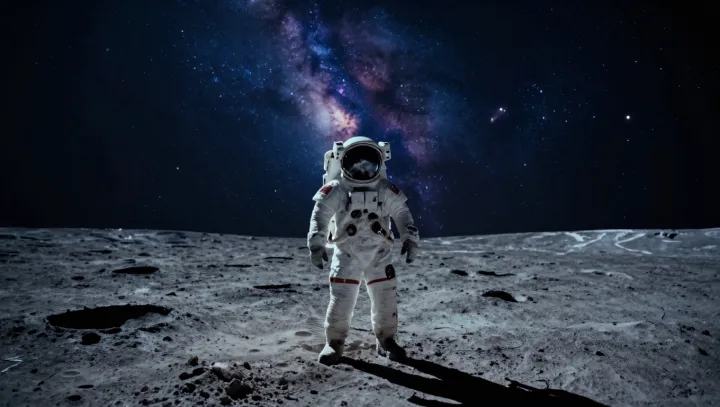
A human name is already printed onto hardware that is not coming back. An interstellar probe, launched without crew but with symbolic passengers, carries a tiny capsule containing the cremated remains of a real astronaut. That payload shares the same escape trajectory as the spacecraft, set to drift beyond the gravitational reach of the Sun.
The paradox rests on the difference between biological life support and orbital mechanics. No crewed vehicle has crossed the deep-space radiation belts or operated beyond cislunar space, because closed-loop life-support systems, radiation shielding and basic metabolic rate constraints keep human missions close to Earth. Space agencies instead fly uncrewed probes that need no oxygen, water recycling or bone-density protection.
On such probes, mass budgets and delta-v are spent almost entirely on instruments and propulsion, not cabins or food. That efficiency leaves room for gram-scale commemorative payloads: etched microchips, DNA samples, or vials of ashes. Once a craft is accelerated onto a hyperbolic escape path, every atom on board, from scientific sensors to memorial capsules, follows the same trajectory out of the Solar System.
This arrangement turns an engineering constraint into a kind of narrative about priorities in spaceflight. Robotic spacecraft do the exploratory work, mapping plasma physics and heliosphere boundaries, while carrying traces of the humans who stayed behind. Long before any crewed mission can solve the entropy-increasing problems of long-duration habitability, one astronaut’s remains are already booked on a permanent outbound flight.