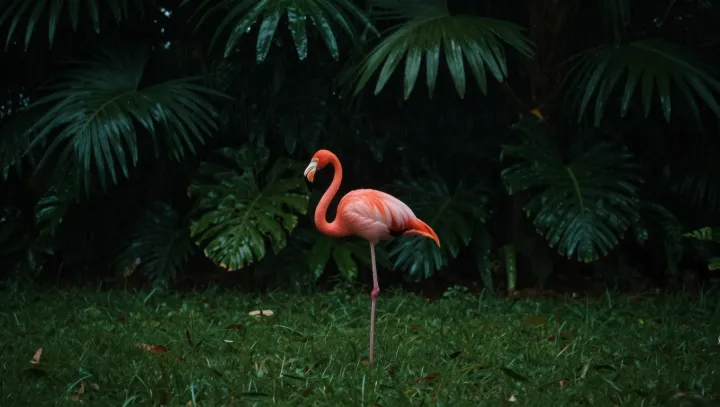
Pink water does the talking before the bird ever lands. In hypersaline African lakes, vast blooms of salt-loving microbes turn entire basins into liquid rose, feeding the flamingos that have become shorthand for this spectacle. Now the same biological script is playing out along Chinese coastal wetlands, where new sightings trace a quiet redistribution of both birds and microbes.
The cast is familiar at the microscopic level. Dense populations of halophilic bacteria and microalgae, including Dunaliella and related phytoplankton, tolerate extreme osmotic pressure and synthesize carotenoid pigments as part of their photosynthetic machinery. Those carotenoids, once ingested, move through the flamingo’s digestive tract into blood plasma, then accumulate in growing feathers and skin via lipid transport, locking pigment into keratin structures much like a chemical watermark.
For the bird, the move from an inland soda lake to a coastal salt flat is less a leap than a lateral shift along the same salinity gradient. Evaporation, ionic concentration and primary productivity combine to replicate the energetic sweet spot for its basal metabolic rate: shallow pans, high salt, abundant microbial biomass. Coastal engineers have further expanded this niche by building evaporation ponds and saltworks that mimic the geometry and chemistry of natural lagoons, increasing habitat connectivity across flyways.
What looks like a whimsical color effect is, in ecological terms, a tight coupling of nutrient cycles, pigment biochemistry and long-distance migration. As coastal wetlands in China maintain or restore brine-rich pools, they are not simply attracting a stray exotic visitor; they are plugging into the same microbial engine that once defined remote African basins, allowing a familiar shade of pink to redraw its map.