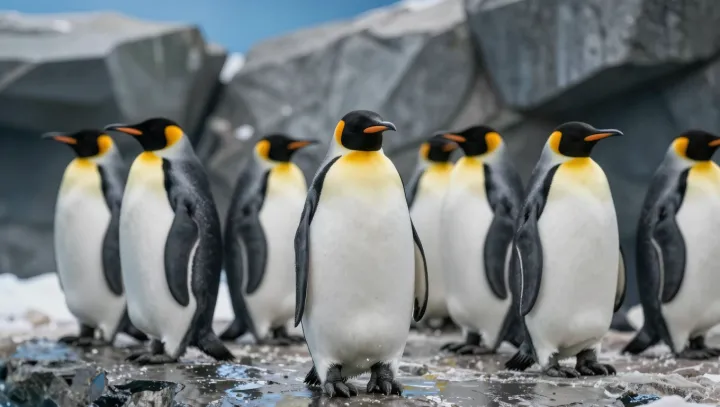
Empty ice and open water frame the Arctic, yet not a single penguin dives there. The environment could support them: cold seas, rich food chains, floating ice. The missing piece is not climate but history, written in continents, currents and hunting records rather than in temperature charts.
Penguins evolved in southern waters and stayed anchored there as plate tectonics rearranged landmasses. Ocean basins and equatorial warm belts acted as physiological and geographic barriers, limiting dispersal and gene flow. Unlike highly mobile seabirds, penguins are flightless, so colonisation depends on stepwise coastal hops, not long-distance flights across thermal fronts or open ocean deserts.
Over long timescales, natural selection shaped penguin morphology, hemoglobin function and basal metabolic rate for Southern Ocean conditions. Parallel niches in the Arctic were filled instead by auks and other diving birds, creating an ecological partition. When humans began large-scale hunting, pressure fell heavily on southern populations already confined by geography, further shrinking ranges rather than enabling any new northern expansion.
Modern shipping could, in theory, move penguins north, but established Arctic predators, disease risks and conservation ethics now form an additional barrier. The result is a one-sided planet: penguins remain southern specialists, while northern ice hosts different black-and-white divers that evolved to answer the same cold-water question by another route.