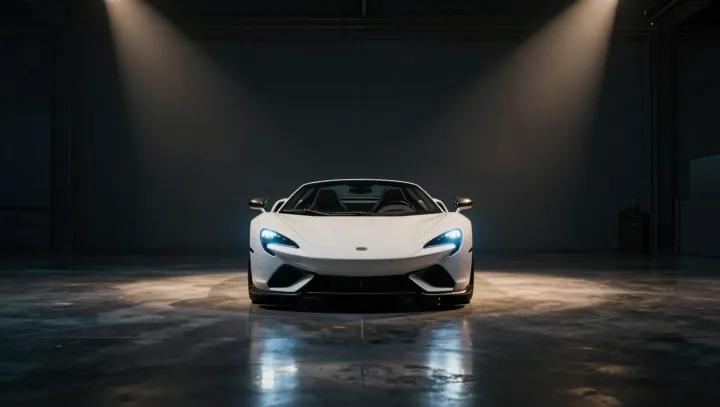
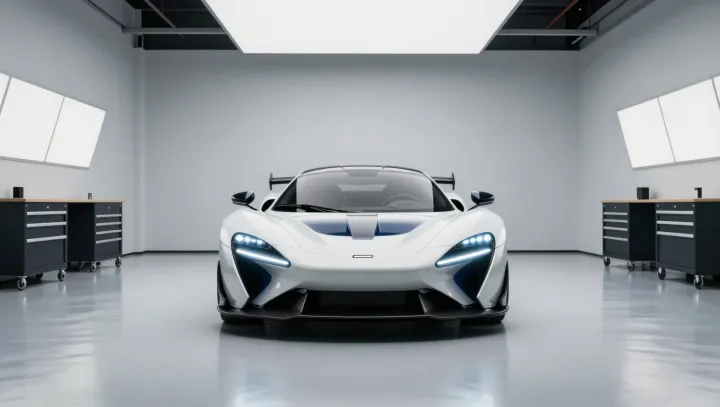
A rear wing no longer behaves like a fixed spoiler on a sculpture in carbon fiber; it now acts like a moving control surface in a flight control system, tilting and rotating mid‑corner to keep a hypercar balanced as it loads up all four tires.
The core idea is not just more downforce but vectoring that downforce. By rotating the wing, the car shifts its aerodynamic center of pressure, trimming understeer or oversteer in real time. Sensors feed data on lateral acceleration, yaw rate and steering angle into an electronic control unit, which treats the wing like an extra pair of steerable wheels in the air stream.
There is also a subtle gyroscopic effect at play: the rotating mass of the wing, with its own angular momentum, resists rapid changes in orientation, adding a sliver of stability as the chassis pitches and rolls. Coupled with principles of yaw damping and aerodynamic torque, the system smooths transient weight transfer, so grip builds more progressively and the driver can lean harder on the car at the limit.
This is active aerodynamics used as chassis management, turning air into a dynamic stabilizer bar and treating the wing not as decoration, but as a real‑time algorithm made visible.