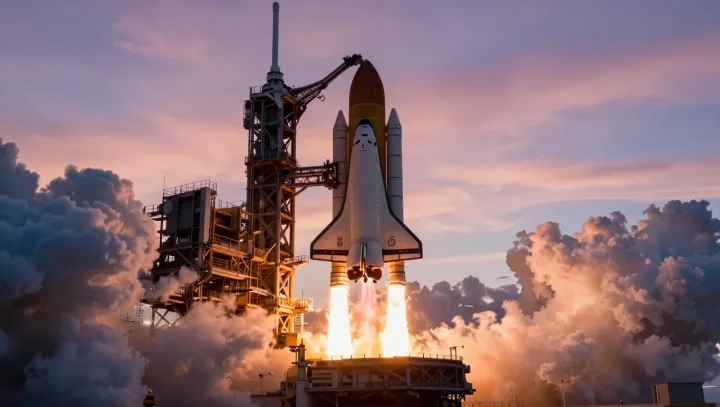
A single Long March 2D can distribute four satellites into separate orbits while flying at nearly eight kilometers per second because the rocket is not one shot but a sequence of precisely timed impulses. The upper stage behaves like a reusable steering node in an orbital network, executing multiple burns and attitude changes instead of a single ballistic arc.
The core tactic is careful budgeting of delta-v and the use of Keplerian orbital mechanics. After main engine cutoff, the upper stage enters a transfer orbit and then performs short reignitions or reaction-control maneuvers to reshape that path. Each burn alters parameters such as inclination and argument of perigee, creating distinct lanes into which satellites can be released without collision risk or signal interference.
Separation systems add further control. Spring pushers, clamp bands and timing circuits define relative velocity, ensuring each spacecraft drifts into its designated slot along the same or slightly phased orbital plane. Guidance, navigation and control computers fuse inertial measurement data with ground tracking, closing the loop between planned ephemeris and real trajectory. The result is a quiet form of in-space traffic management performed at hypersonic speed, with the upper stage acting as both truck and traffic light in low orbit.