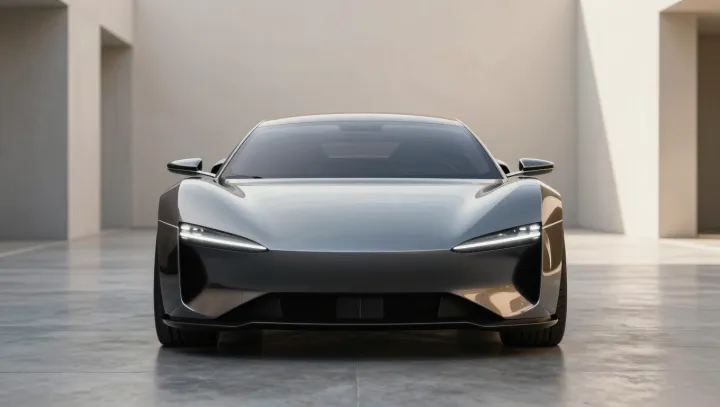
A long hood, low roof and cab‑rearward stance once announced a front engine and a committed driver. The brief now demands a fully connected, autonomous, shared, electric machine, yet the visual drama must remain. Design teams are treating this clash of expectations as a packaging and systems problem rather than a nostalgic styling exercise.
The heart of the solution is an electric skateboard platform: battery modules and in‑wheel or axle‑mounted motors sit in a flat plane, freeing the entire front volume as sculptural real estate. By relocating crash structures and steering actuators into a compact front module, engineers preserve pedestrian impact zones while stretching the dash‑to‑axle ratio that signals performance. Sensor fusion for autonomous driving, built on lidar, radar and high‑resolution cameras, hides behind darkened glazing and grille apertures, keeping the coupe’s face clean even as its perception stack grows denser.
Inside, the traditional driver‑centric cockpit yields to a symmetric layout that supports both private ownership and shared mobility, using over‑the‑air architecture and vehicle‑to‑everything connectivity as a kind of metabolic circulation that keeps software, maps and diagnostics in homeostasis. Designers fight entropy in the cabin by using adaptive ambient lighting and retractable controls: when the car drives itself, interfaces sink away and a single horizontal display becomes a lounge‑like media surface; when manual control is allowed, a steer‑by‑wire yoke and pedals rise from flush panels, restoring a focused driving position under that still‑theatrical roofline.
The resulting silhouette reads like a classic grand tourer parked at the edge of a very different mobility system, its proportions preserved even as its nervous system and powertrain quietly belong to another era.