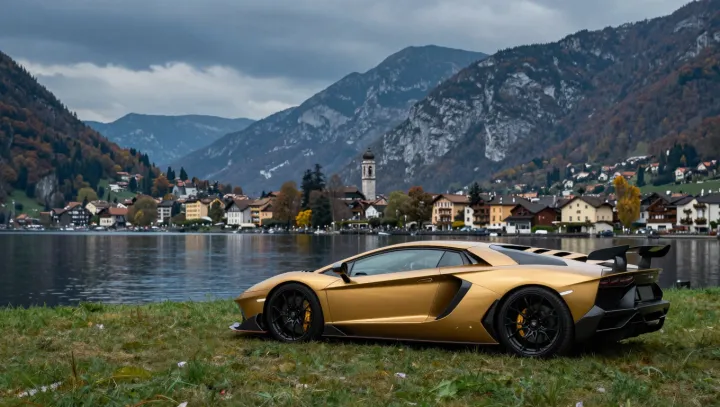
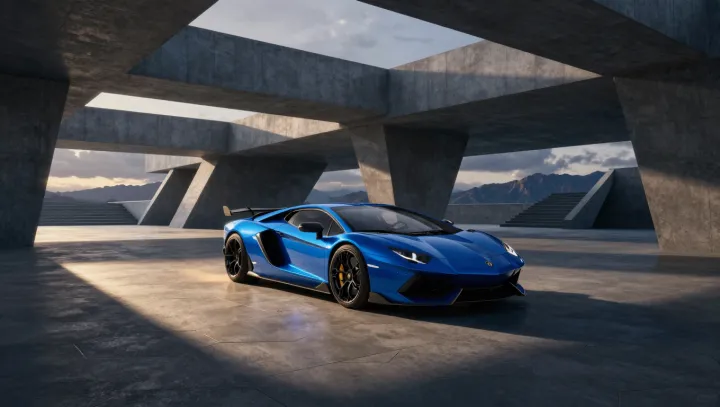
The final Aventador Roadster arrives with output that eclipses the track‑focused SVJ, yet its foundations come from the more compliant Aventador S rather than a circuit weapon. This is not an engineering contradiction as much as a deliberate recalibration of what a flagship open‑top V12 is supposed to do.
Power is the easy part: a naturally aspirated V12 has generous headroom in combustion efficiency and volumetric efficiency, so revised cam profiles, intake geometry and engine mapping can push peak figures beyond the SVJ without rethinking the entire platform. Chassis tuning is harder to cheat. The Aventador S architecture was designed around ride comfort, noise management and structural flex allowances for roof removal, so its suspension kinematics, damper curves and anti‑roll bar rates were always biased away from the razor edge.
Rather than force SVJ‑level lateral g on an open car, engineers leaned on aerodynamics, torque curve shaping and electronic stability logic to deliver headline acceleration while keeping transient load transfers less aggressive. That fits the car’s real use case: high‑speed grand touring, not repeated hot laps. The last Aventador Roadster thus uses maximum engine potential as theatre, while the S‑based chassis enforces a different kind of discipline, trading ultimate lap time for a broader, more usable performance envelope.