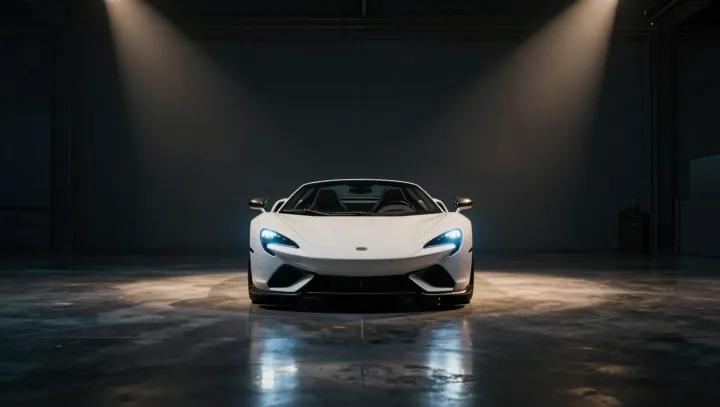
Airflow replaces glass when a 759 hp Lamborghini V12 runs without a windscreen at speeds that would shred most convertibles. Instead of a transparent barrier, the bodywork, ducts and vanes are shaped to generate a controlled pressure field around the cockpit, turning oncoming air into an invisible shield that keeps the driver’s head and torso inside a relatively calm bubble.
Engineers start with computational fluid dynamics and wind‑tunnel data, treating every surface as a way to sculpt laminar flow over the nose, then deliberately trigger turbulence where it is useful. A deep front splitter and side blades generate downforce, while a central deflector and twin channels in the hood accelerate air up and over the cabin. This creates a pressure gradient that bends the airflow like a transparent canopy, reducing stagnation pressure on the driver’s helmet and cutting buffeting that would normally cause neck strain.
At the flanks, carefully angled fins feed boundary‑layer air into side vortices that frame the cockpit. These coherent vortical structures act as rails, stabilizing the main airstream over the driver while also directing high‑energy flow to the rear wing for additional downforce and yaw stability. The result is a car that can exploit the V12’s power, exceed conventional highway speeds and still keep the driver’s posture and breathing manageable through aerodynamics alone, rather than any physical windshield.