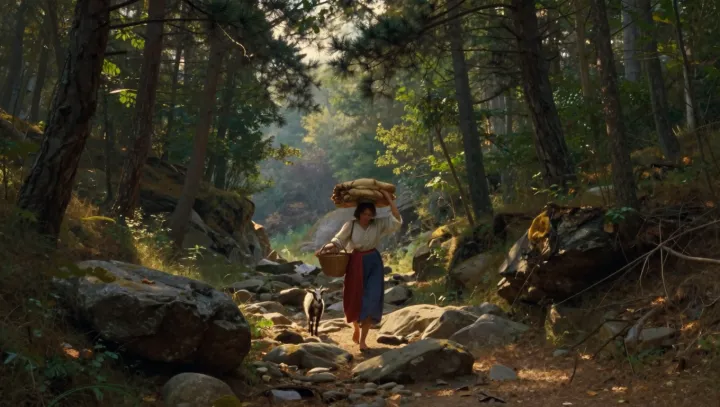
A small genre painting of a girl and her goat does more than freeze a quiet rural scene; it records a decisive change in how humans thought about the animals that fed them. Where earlier images treated livestock as mobile capital and calories, this composition lingers instead on a relationship, inviting viewers to measure affection rather than output.
Art historians read this shift against the background of industrialization and urban migration, which displaced subsistence farming while raising the cultural value of an idealized countryside. As factories assumed more of the work of survival, the marginal utility of each individual goat as meat or milk declined, while its symbolic value as a partner in innocence rose. The same economic logic that increased market wages also enlarged the moral circle to include creatures once seen purely as resources.
Brushwork and framing underscore that new priority: the goat is brought to the pictorial foreground, its gaze almost level with the child’s, collapsing the distance between property and companion. Sentiment here does not abolish exploitation, but it does complicate it, transforming a work animal into a quasi-pet long before pet culture became a mass urban norm. In that suspended look between girl and goat, a preindustrial contract built on survival starts to give way to a modern ethics of care.