
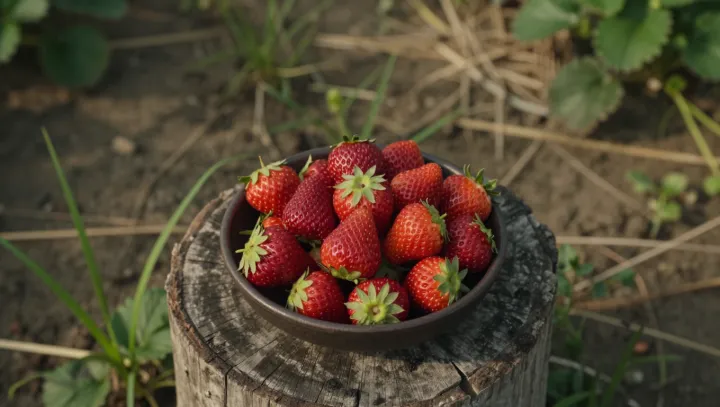
Perfectly glossy strawberries on the shelf may be the ones you should avoid. Produce specialists now flag extreme shine, weak aroma and flat seeds as early warnings that a berry was bred or treated for appearance, not flavor.
Smell is the first filter: high quality fruit releases a clear mix of volatile organic compounds near the stem. When a pile of bright berries gives off almost no scent, it often means diluted sugars and low aroma concentration, even if the color looks intense.
Seeds tell a second story. When a strawberry’s achenes sit flush with the skin in uniform rows, it can signal rapid, forced enlargement of the receptacle tissue, with high water content and lower soluble solids. Slightly raised, irregular seeds usually track with slower growth and better flavor density.
Then comes the shine check. A thin, natural cuticle gives a soft, waxy glow, not a hard, plastic gloss. An almost lacquered surface can indicate heavy handling, coating or varieties selected for transport durability over sensory quality, increasing shelf life while eroding taste value for the buyer.
In practice, the fastest screen is simple: lift the box, sniff for a real strawberry cloud, scan for seeds that sit a little proud of the surface, and prefer a gentle sheen over mirror-like glare. In five seconds, that quick audit often outperforms blind trust in perfect-looking fruit.