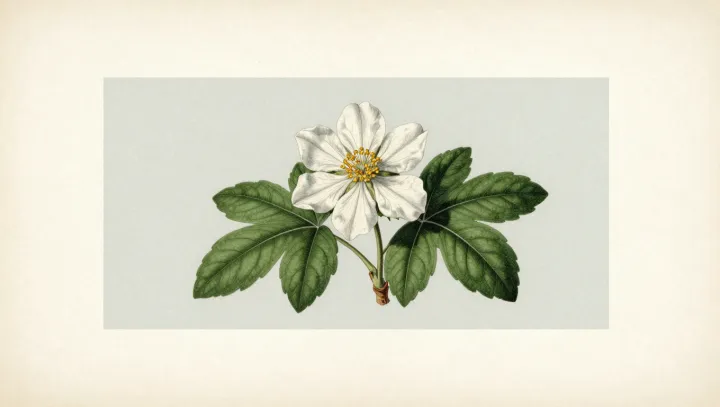
The same white camellia has carried three radically different meanings across East Asia. In imperial Chinese gardens, it functioned as a scarce luxury item, controlled by court supply chains and linked to status within a rigid hierarchy. Its dense petals and out-of-season bloom served as evidence of horticultural mastery and resource surplus, reinforcing a visible social gradient inside palace walls.
In Japan, the flower entered a visual ecosystem already shaped by wabi-sabi and the tea ceremony, where marginal utility favored restraint over display. Stripped of court spectacle, the white camellia was reframed as a single, quiet focal point in tokonoma alcoves and ink paintings. Its value came not from abundance but from controlled entropy: one bloom, empty space around it, and an aesthetic that treated absence as an active design element.
On the Korean peninsula, the same species was woven into narratives of endurance under hardship. Folk usage and later nationalist discourse emphasized the plant’s evergreen physiology and tolerance of poor soils as a living metaphor for social resilience. Rather than signal rank or curatorial taste, the camellia became a kind of botanical testimony, its winter flowering aligned with ideas of persistence when political and economic structures were under stress.