
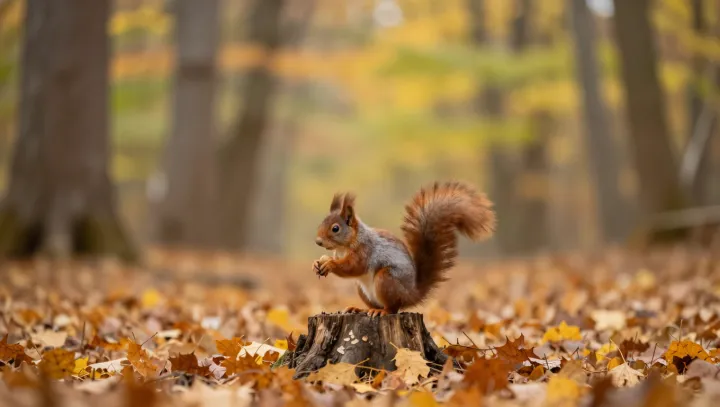
Overhead movement in a squirrel’s visual field is not a neutral event; it is a built‑in alarm that once meant the difference between life and death. Any hand reaching down from above is processed by the visual cortex, flagged by the amygdala and routed into a rapid fight‑or‑flight pattern before conscious evaluation even begins.
To teach a pet squirrel to trust that same trajectory, trainers lean on classical conditioning and operant conditioning rather than brute persistence. The body stays low, with the hand entering from the side, not from directly above, reducing the angular profile that mimics a raptor’s dive. Food rewards arrive in a strict sequence: first placed at a distance, then progressively closer to the stationary hand, then finally only when the animal makes voluntary contact.
Across repeated sessions, the animal’s threat‑detection threshold shifts. Synaptic plasticity alters the coupling between visual motion cues and autonomic responses such as heart rate and cortisol release. The once reflexive association between an overhead approach and predation is diluted by a more reliable contingency: that this particular hand predicts high‑value food and safe retreat options. Trust, in neurobiological terms, becomes a new default prediction rather than an exception carved out of fear.