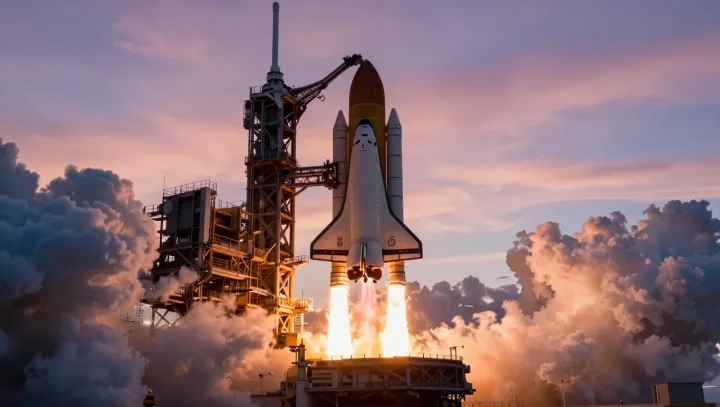
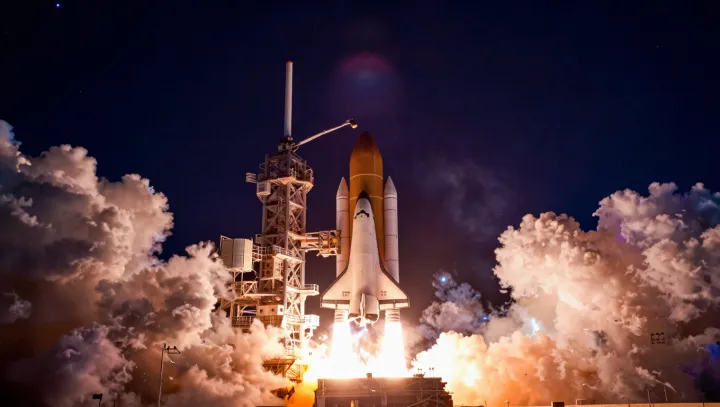
Retirement of the Space Shuttle marked the end of a bold bet on reusability that never closed its cost and risk equations. Designed as a routine orbital transport, the system evolved into a fragile compromise between military range requirements, crewed flight and heavy cargo ambitions.
The Shuttle’s architecture fused a winged orbiter, twin solid rocket boosters and a large external tank, multiplying failure modes instead of reducing them. Reuse was not simple refurbishment but deep disassembly, non‑destructive inspection and painstaking recertification, driving up labor and extending turnaround times. Instead of airline‑style operations, each launch became a bespoke engineering project, with safety dominated by concerns over foam shedding, solid booster joints and complex thermal protection tiles.
Expendable launch vehicles, by contrast, kept lower structural and operational entropy by using fewer stages, simpler propulsion arrangements and clean separation events. Fixed‑cost overhead for Shuttle infrastructure had to be spread over a limited flight rate, eroding any marginal cost advantage of reusing the orbiter and boosters. Payload to orbit per dollar remained uncompetitive against conventional rockets, while abort options, cross‑range limits and high program risk constrained mission flexibility. The Shuttle ultimately proved that partial reusability without radical simplification can lock a program into high complexity, high cost and narrow margins for failure.
An empty launch pad, silent gantries and a scorched runway now stand as a quiet ledger of that experiment in reusable access to space.