
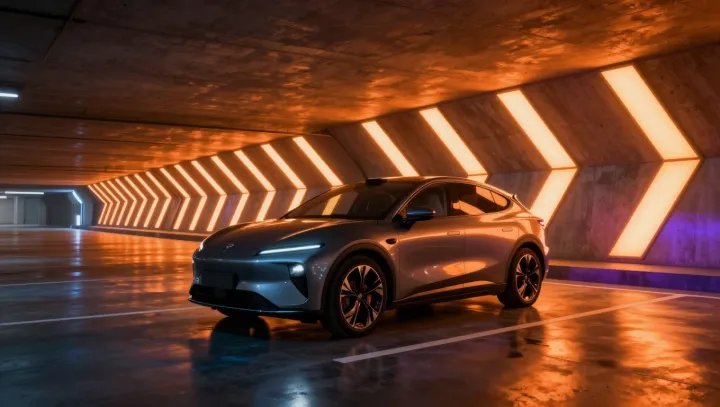
The sloping tail of Audi’s Q4 E-Tron Sportback is not a styling whim; it is a range strategy. By tightening the roofline and tapering the rear glass, the body cuts the wake behind the car, reducing pressure drag and slightly lowering the drag coefficient compared with the standard Q4 E-Tron.
That smoother airflow shrinks aerodynamic drag at highway speeds, where resistance scales with the square of velocity and power demand rises with the cube. With a fixed battery pack and unchanged curb mass, lower drag directly improves energy efficiency, measured as watt-hours per kilometer, and unlocks extra usable range on the same state of charge. The trade is simple physics: a smaller turbulent wake outside means a smaller cargo box inside.
Engineers leverage that trade because, beyond a certain point, adding battery capacity runs into diminishing returns and higher vehicle mass. Aerodynamic optimization, by contrast, delivers a compounding marginal effect on both range and cruising refinement. For buyers who rarely fill the trunk to the roof but obsess over distance between charging stops, that lost cubic volume becomes an efficiency investment rather than a sacrifice.