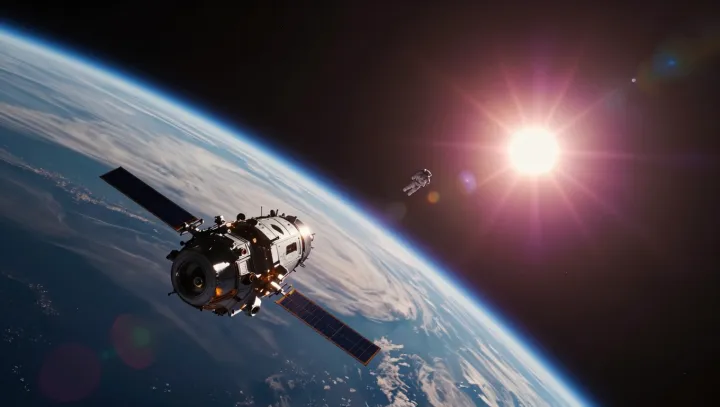

Planetary protection policy is the quiet reason astronauts are treated like potential biohazards when they land. Even though open space is almost sterile, missions do not float in a perfect vacuum. Spacecraft graze dust, interact with planetary atmospheres and lander hardware, and can encounter ice, regolith and trace gases that might shelter unknown microorganisms.
Back on Earth, quarantine acts as a biological firewall. Agencies have to manage two directions of risk: backward contamination, where a hypothetical alien microbe enters Earth’s biosphere, and forward contamination feedback, where human and terrestrial microbes evolve in space and then reenter ecological networks at home. The whole system follows a precautionary principle because one failure could create irreversible ecological consequences, a kind of biological entropy increase that cannot be rolled back.
There is also a very terrestrial reason. Long missions alter immune function, including T cell regulation and cytokine signaling, while microgravity reshapes basic metabolism and fluid distribution. A crew member who left Earth with a robust immune response may return temporarily immunocompromised, more vulnerable to ordinary pathogens and more likely to shed viruses that had been latent. Quarantine, medical surveillance and controlled contact close that loop, protecting both the astronauts and the environment they reenter.