
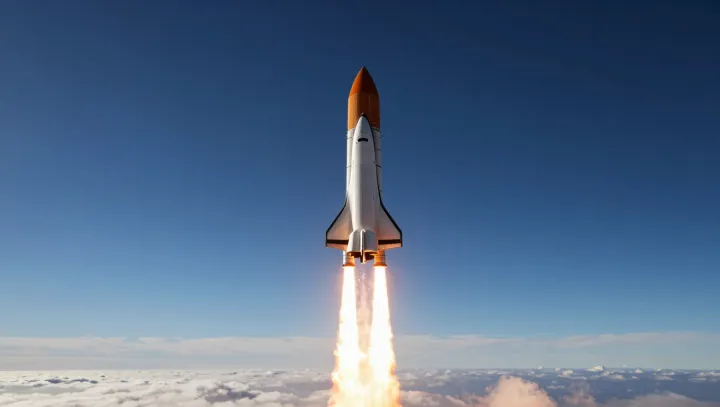
A rocket built to reach orbit can also become a point-to-point transport system, turning a long intercontinental flight into a short ballistic hop. Instead of accelerating to orbital velocity, the vehicle follows a suborbital arc, touching space before falling back to a distant landing pad.
The same high-thrust engines that drive an orbital launch stack push the rocket along a shallow trajectory, trading horizontal velocity for range. Guidance, navigation and control systems solve the same equations of orbital mechanics, but target a precise reentry corridor rather than continuous orbit. The flight path is a controlled ballistic trajectory, with apogee outside the dense atmosphere to minimize drag and fuel use.
Thermal protection systems designed for orbital reentry manage aerothermal heating as the vehicle slams back into thicker air at hypersonic speed. Structural margins, already sized for ascent loads and dynamic pressure, also handle the stresses of reentry and powered landing. Reusable booster technology and propulsive landing allow quick turnaround, using the same airframe for multiple high-energy hops.
Inside the cabin, life support and environmental control leverage spacecraft-grade pressure vessels rather than traditional airliner fuselages. The entire trip compresses climb, cruise and descent into a single high-arc maneuver: a near-vertical launch, a brief coast in microgravity conditions, then a steep, guided fall and final engine burn onto a landing platform near the destination.