
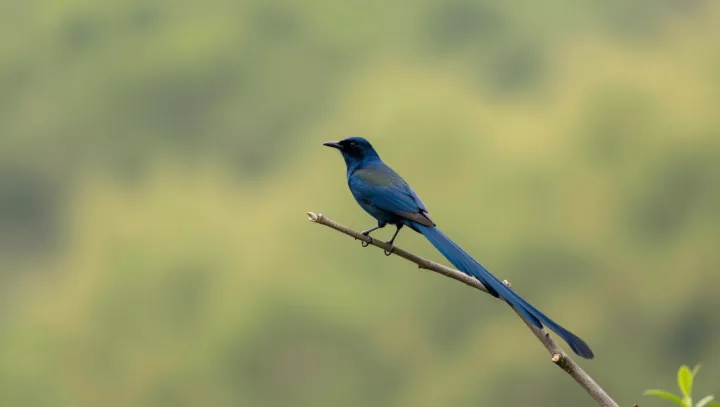
An isolated snag in the rainforest canopy often holds a dark, long-tailed silhouette: the greater racket-tailed drongo. Instead of melting into foliage, this bird routinely claims the most exposed branch it can find, turning itself into an obvious target in a landscape full of ambush predators.
The gamble rests on foraging efficiency and information flow. From a high, open vantage point, a drongo gains a wide field of view, tracking moving insects and small vertebrates with minimal wingbeats. Shorter pursuit flights mean lower energy expenditure and a better energy budget, a key constraint in tropical environments where competition is intense. The exposed position also lets the bird spot predators early, converting visual range into reaction time, which improves its survival odds despite greater visibility.
The perch is also a social broadcast tower. Drongos specialize in alarm calls and vocal mimicry, exploiting mixed-species flocks. By calling from an exposed, central point, a drongo can rapidly signal approaching hawks or snakes, recruit other birds into a loose defensive coalition and then intercept prey flushed by their panic. This behavior exemplifies a classic predation risk–foraging trade-off: accept higher detectability in exchange for better resource intake and more reliable social information. For a species that lives by vigilance, the riskiest branch becomes the most valuable platform.