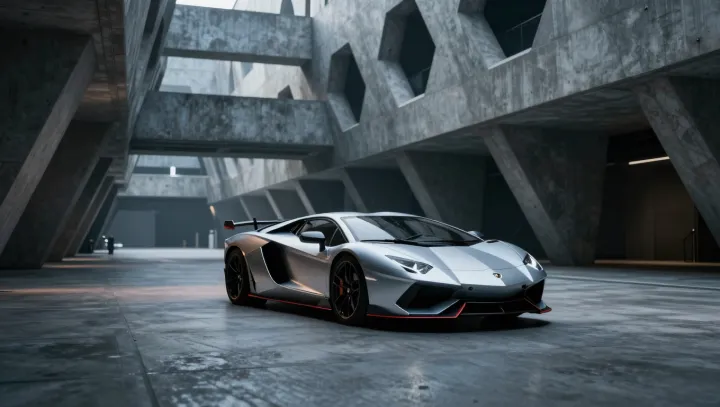
A naturally aspirated V12 at redline becomes more than an engineering artifact when a carmaker chooses to end its story with a 780 horsepower crescendo. Lamborghini has spent years refining combustion efficiency, airflow dynamics and crankshaft balance not to chase marginal gains against turbo‑hybrids, but to distill what its brand sounds and feels like at full volume.
In a market ruled by torque curves shaped by turbocharger boost and energy‑recovery systems optimized through thermodynamic efficiency, the decision to double down on a high‑revving, emissions‑strained layout seems irrational on paper. Yet brand equity does not follow the neat slope of a demand curve or the tidy arithmetic of marginal cost. For Lamborghini, the V12 functions as cultural infrastructure: it encodes a specific entropy of noise, vibration and mechanical drama that no battery pack, however powerful, can replicate. The car’s farewell specification effectively freezes a moment in automotive evolution and turns it into a collectible thesis on what performance once meant when throttle response was linear, rev ceilings were sacred and soundtracks were written by valves instead of software.
As regulations, fleet averages and hybrid architectures close in, this last V12 does not compete with the future so much as it defines the boundary between eras, leaving the hybrid‑turbo world to solve efficiency while it holds the line for excess, just once more.