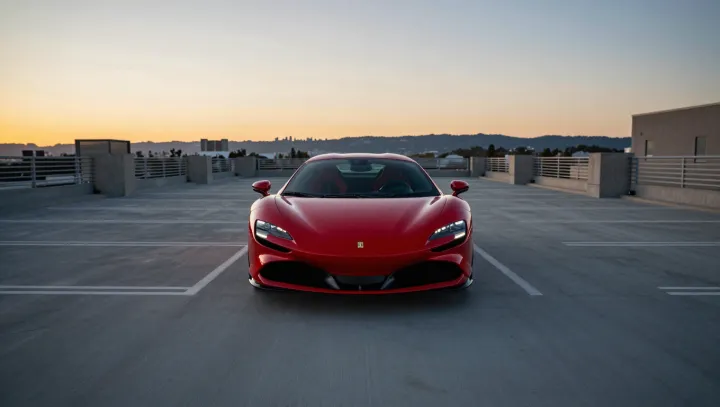
A modern Ferrari’s control unit is already working before a driver finishes a thought. Every instant, electronic control systems sample wheel speed, steering angle, yaw rate and throttle position, then update their outputs in tight feedback loops that run many times within a single blink.
The contrast with the human brain is numerical as much as philosophical. Neural transmission across synapses, limited by ion channel kinetics and refractory periods, introduces delays measured in tens or hundreds of milliseconds from perception to conscious action. By the time cortical circuits have integrated visual input and planned a response, the car’s algorithms have executed multiple iterations of traction control, torque vectoring and stability correction. These loops, grounded in classical control theory and real‑time optimization, exploit data streams from accelerometers and gyroscopes to keep the chassis within a narrow performance envelope while preserving safety margins.
In effect, silicon and software handle high‑frequency corrections while the biological driver manages low‑frequency strategy. The machine’s capacity for rapid, repetitive computation pushes the boundary at which human agency yields to automation, even as the driver still feels fully in charge of the car’s intent.