
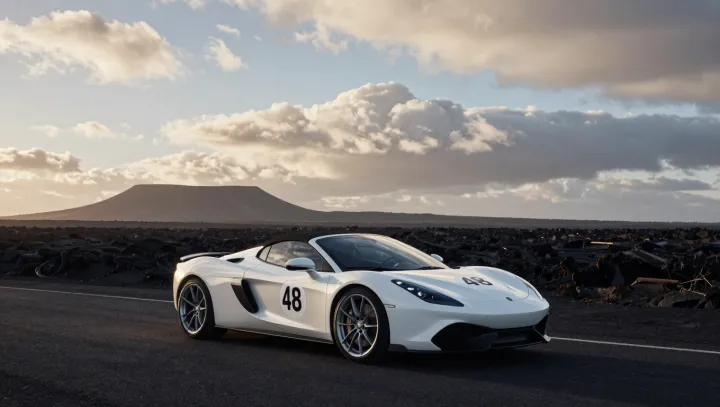
A lower claimed top speed and a higher rev ceiling sit at the heart of Porsche’s most conflicted 911 Speedster. One number is deliberately conservative, the other aggressively race‑bred, and together they explain how the car was positioned as a road‑legal farewell to the GT3 motor.
The capped top speed is primarily an aerodynamics and stability story. The Speedster’s open‑top body, shorter windscreen and clip‑on tonneau generate more drag and less high‑speed downforce than a comparable fixed‑roof 911, narrowing the safety margin in terms of yaw stability and lift balance. Engineering sign‑off for very high terminal velocity must account for worst‑case crosswinds, tire heat build‑up and structural fatigue in the roofless shell, so Porsche chose a lower official figure rather than chase a headline number that the body style could not comfortably support on public roads.
The engine tells the opposite story. The naturally aspirated 4.0L flat‑six was tuned with motorsport‑grade components, including lightweight forged pistons and rigid valve‑train geometry, to survive sustained operation beyond eight thousand crankshaft revolutions per minute. High revs increase mean piston speed, frictional losses and thermal load, but also sharpen throttle response and extend the usable power band, preserving the character of a competition engine in a homologated package. Porsche used the Speedster as a final showcase for this GT3 combustion architecture before emissions constraints and turbocharged strategies redefined its performance fleet.