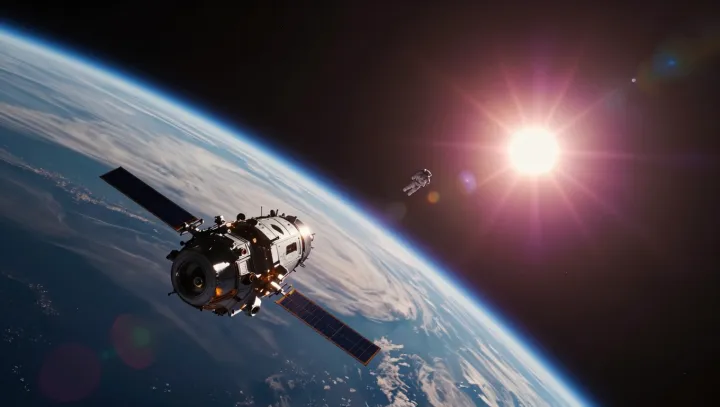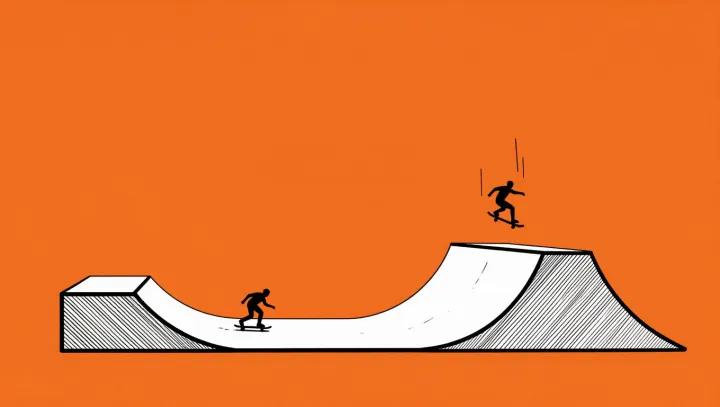

The same field seen from 100 meters up stops being scenery and becomes a diagram. Rows, grids and branching lines emerge, even though the biology of human vision is unchanged. What shifts is spatial scale, and with it the information density that the brain can compress into a coherent pattern.
On the ground, sight is constrained by occlusion, local contrast and perspective distortion: trees block irrigation lines, buildings hide street grids, slopes warp distances. The aerial view removes much of that visual noise, allowing Gestalt grouping and pattern recognition to work on entire systems instead of fragments. Brain circuitry that evolved for edge detection and motion tracking suddenly locks onto symmetries, Voronoi‑like parcel shapes and network topology in roads or rivers.
This change in vantage point effectively alters the marginal effect of each additional meter of distance. Close up, new meters add more detail but not more structure; higher up, each meter expands the field of view and reveals clustering, hierarchy and redundancy. Concepts familiar from remote sensing and information theory, such as spatial resolution and signal‑to‑noise ratio, start to govern what becomes visible. The human eye remains the same optical device, yet the landscape, under a new geometry, starts to read like data rather than scenery.