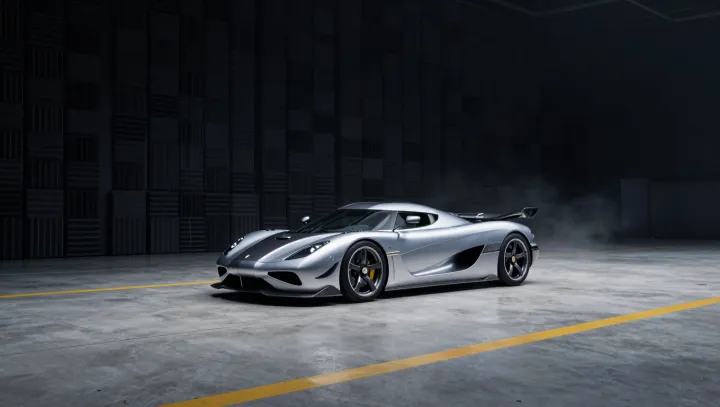

Every lap in Toyota’s GT4 concept becomes a moving equation, not a horsepower contest. The car treats grip, drag and energy use as variables in a continuous trade‑off, with control software adjusting how each millisecond is spent on cornering, braking or straight‑line speed.
Instead of chasing a higher power output, the system leans on vehicle dynamics fundamentals: tire load sensitivity and friction coefficient models predict how much lateral force each tire can generate before slip. Sensors feed a control unit that modulates torque vectoring, brake pressure and active suspension to keep each contact patch near its optimal operating window, extracting more usable grip from the same mechanical package.
Aerodynamics and thermodynamics form the second axis of this strategy. Active aero elements balance drag and downforce based on real‑time estimates of Reynolds number regimes and pressure distribution over the body. At the same time, an energy management layer tracks battery state of charge and brake‑by‑wire heat flux, deciding when to harvest, when to deploy, and when to reduce cooling drag. The result is a car that treats the lap like an optimization problem, continuously reallocating its finite energy and airflow budget to where they cut the most time.