
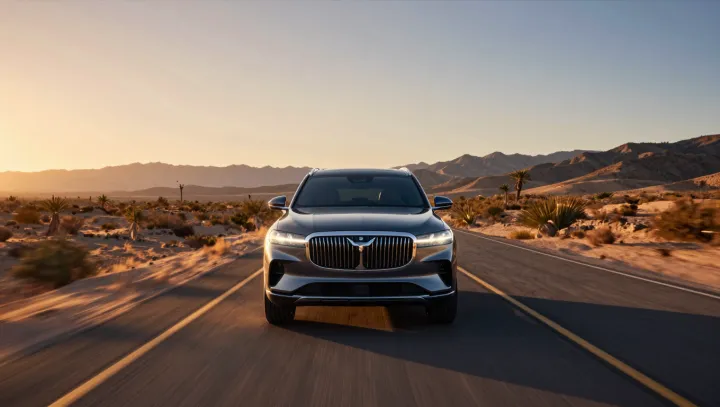
An all-new platform now sits under one of Lexus’s core SUVs, yet its mission hardly shifts: deliver efficiency while keeping choice alive. The model is rebuilt from chassis rails to powertrains, but still offers both hybrid propulsion and the option of front- or all-wheel drive for buyers who want different use cases.
Lexus starts with a reengineered unibody architecture designed to cut mass and increase torsional rigidity, a classic exercise in structural dynamics and materials engineering. That fresh foundation allows engineers to repackage the engine bay and rear subframe, making room for multiple powertrain layouts without redesigning the basic hard points. A hybrid system with an internal combustion engine, power-split device and traction motor is integrated so that front-drive versions concentrate components near the transaxle, while all-wheel-drive variants add an extra motor unit at the rear without a bulky mechanical transfer case.
Energy management leans on power electronics and a compact lithium-ion battery, controlled by software that constantly balances state of charge and torque distribution, applying control theory principles to keep efficiency high in urban driving and highway cruising. At the same time, the modular layout lets Lexus mount conventional gasoline engines or different hybrid outputs within the same engine cradle. By standardizing mounting points, cooling circuits and high-voltage interfaces, the company can scale production, contain costs and keep open a portfolio that still includes front-drive commuters and all-wheel-drive family haulers.