
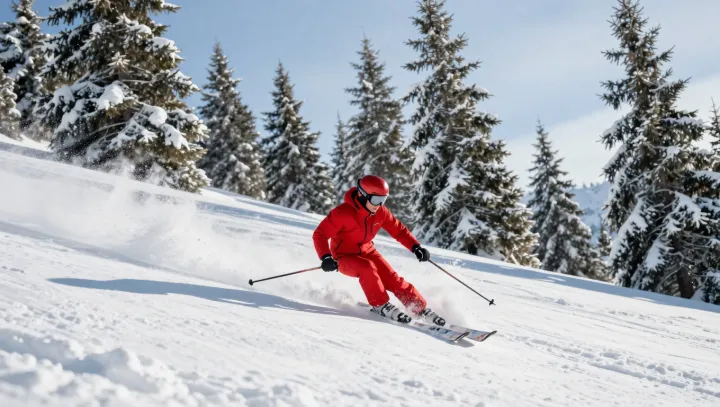
A faint figure-eight etched beside a ski track now tells coaches more than a powerful spray of snow. In modern technique, the inside leg becomes the quiet governor of the turn, setting radius and pressure while the outside leg simply delivers the outcome.
The logic is biomechanical: by tipping the inside ski, athletes modulate edge angle and center of mass trajectory without spiking ground reaction force. Instead of muscling the outside leg, they use coordinated hip rotation and ankle inversion to let sidecut and centripetal force do the carving. That tiny ‘8’ in the snow reveals whether the pelvis stays stacked, whether femur rotation is clean, and whether pressure distribution follows a smooth force curve rather than abrupt peaks.
Coaches now watch the inside leg as if it were a fine-tuning dial. Micro-changes in knee flexion and dorsiflexion adjust turn radius with almost surgical precision, helping athletes conserve metabolic energy, stabilize vestibular balance, and maintain speed across variable terrain. The big, loud spray still looks impressive; the inside leg trace shows who is actually in control.