On some distant planets, the forecast includes showers of molten glass or even diamonds. These exotic storms emerge when gravity, temperature and atmospheric chemistry push familiar materials past ordinary limits, turning what would be dust or vapor on Earth into violent, blazing precipitation far from any human sky.
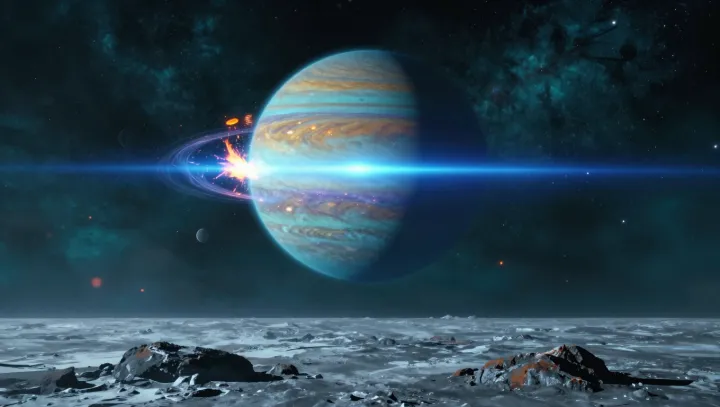
On certain so called hot Jupiters, fierce stellar radiation heats silicate rich clouds until they condense as droplets of liquid glass. Because local wind speed can exceed several kilometers per second, those droplets do not fall gently but are driven sideways, forming horizontal storms that track the planet’s locked day side. The underlying physics follows basic thermodynamics and phase transition theory, yet the outcomes feel almost surreal, with silicate condensates replacing Earth’s water vapor and rain.
Diamond rain begins even deeper in giant planets and similar worlds. Under extreme pressure, carbon bearing molecules such as methane break apart, letting carbon atoms bond into solid lattices. As these lattices grow, they sink through dense fluid layers like mineral hail, a process that relies on high bulk modulus and immense gravitational acceleration. Planetary scientists suggest this internal diamond precipitation may influence heat transport and convection, adding an unconventional term to the energy budget of such atmospheres and interiors.