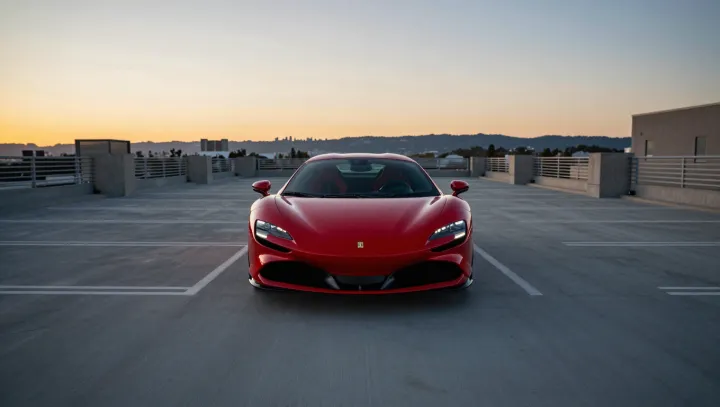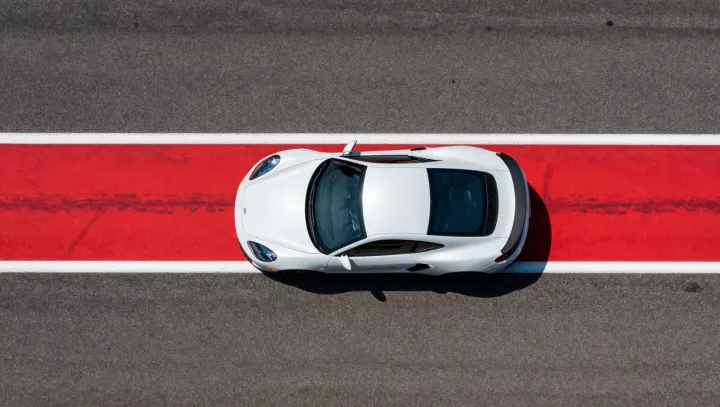

Empty white space on a gallery wall can drive the brain harder than a packed street snapshot. Eye tracking studies report longer fixations and more back‑and‑forth saccades when viewers inspect minimalist, high‑contrast scenes with few objects. Instead of skimming across many obvious targets, the visual system must linger, test hypotheses and hunt for relevance in what looks like almost nothing.
Cognitive load research helps explain the paradox. Sparse images often create perceptual ambiguity and low contextual redundancy, forcing working memory to maintain multiple interpretations at once. With fewer cues, the brain cannot rely on automatic pattern recognition or high prior probability; it must recruit top‑down attention, update internal models and resolve prediction error. That pushes intrinsic cognitive load higher than in cluttered, familiar scenes, where clear gist and strong schemas let processing run on efficient heuristics.
Minimalist compositions also manipulate figure–ground segregation and Gestalt grouping, which tunes neural competition across the visual cortex. A single off‑center object on an empty plane can keep saliency maps in constant recalculation as the viewer asks whether the real signal lies in the object, the negative space, or the implied horizon. The result is not sensory overwhelm from too many pixels, but metabolic and computational strain from uncertainty, interpretation and sustained attention.