
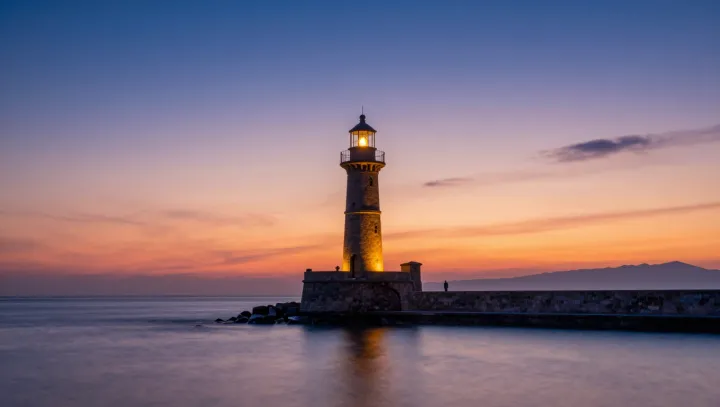
A narrow beam of white light cutting across rough water still decides whether a ship stays clear of rocks. In an ocean crowded with satellites and algorithms, that static tower remains part of the safety system, not a museum piece.
Modern navigation stacks look precise because of global positioning systems, inertial navigation units and digital charts, but they share one vulnerability: dependence on radio frequency signals and onboard electronics. GPS can suffer from jamming, spoofing and multipath interference. Satellite links can be lost in geomagnetic disturbance or hardware failure. When that happens, an optical landfall mark powered by an independent electrical circuit and a Fresnel lens offers a separate physical reference, based on line of sight and human visual perception rather than signal processing.
Risk analysis in shipping treats lighthouses as a redundant control that lowers systemic entropy in complex traffic corridors. They also support the traditional method of coastal piloting, which relies on bearing lines, visual ranges and depth contours, not just electronic chart display and information systems. If a vessel loses power to its primary sensors, a visible sector light or occulting pattern can still give position, orientation and hazard distance. That separation of failure modes turns an old concrete tower into a maritime safety backup that digital infrastructure alone cannot fully replace.