
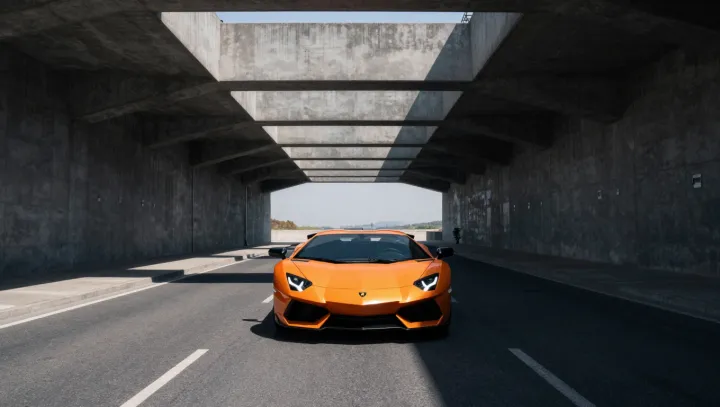
A bright, low chassis sits almost flush to the asphalt, air slicing around its sharp nose and over a roof barely higher than a child. This is Lamborghini’s latest supercar, a machine that can surge past 200 miles per hour, yet post a lower CO2 output per unit of power than a surprising number of family SUVs.
The paradox starts with powertrain architecture. Lamborghini pairs a high specific‑output combustion engine with an electrified system that recovers kinetic energy through regenerative braking and redeploys it via an electric motor. By lifting the engine’s thermal efficiency and letting the motor handle low‑load scenarios, the car spends less time in fuel‑wasting operating ranges, improving grams of CO2 per horsepower‑hour even when outright power climbs.
Chassis and body engineering compound the effect. Extensive carbon‑fiber structures, aluminum subframes and optimized mass distribution trim curb weight while maintaining torsional rigidity, so the engine’s energy is converted more efficiently into acceleration rather than inertia. Active aerodynamics and reduced drag coefficient lower the power required to sustain high cruising speeds. Modern engine control units constantly adjust air‑fuel mixture, ignition timing and valve actuation, squeezing more useful work out of each combustion cycle and reducing specific emissions compared with many taller, heavier SUVs.
Regulatory pressure around fleet average CO2 and consumer scrutiny of fuel economy turn this engineering puzzle into a strategic necessity. Lamborghini’s answer is not to slow its cars down, but to treat every joule of fuel as a scarce resource to be multiplied by electronics, materials science and fluid dynamics until excess CO2 is engineered out of the equation.