
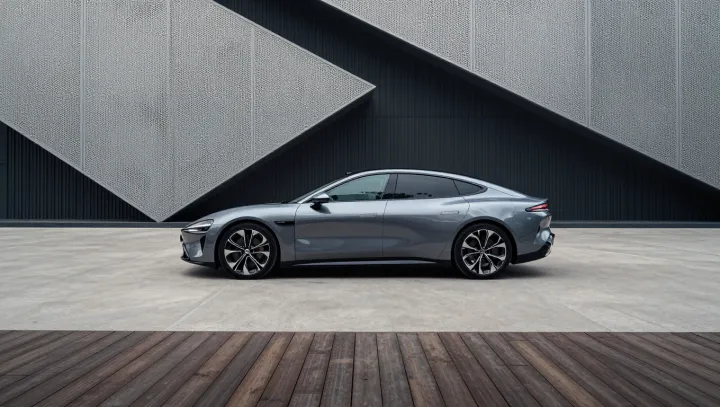
Electric range shrinks as power in the new RS E-Tron GT climbs to 636 hp, because the same battery pack cannot deliver both maximum sprint and maximum endurance under today’s chemistry and cooling limits. The car becomes a case study in how energy density, thermal ceilings and efficiency losses collide in a modern performance EV.
At the core is specific energy: a pack sized for long-distance cruising stores a finite kilowatt-hour budget. When Audi raises peak power by demanding higher current, ohmic resistance turns more of that stored energy into heat through Joule heating, rather than forward motion. That forces the thermal management system to work harder, expanding the share of energy devoted to keeping cell temperature within a safe operating window defined by electrochemical stability.
Engineers also face entropy production inside each lithium-ion cell. Pushing for brutal acceleration increases internal polarization losses and accelerates side reactions, so software must hold a conservative state-of-charge buffer to protect cycle life. A larger buffer effectively reduces usable capacity, shortening range. Power electronics add another layer: inverters and motors run farther from their peak efficiency island at high load, increasing conversion losses.
Chassis targets amplify the compromise. Wider tires, stronger brakes and reinforced suspension hardware that can cope with repeated high-power launches add mass and rolling resistance, raising the vehicle’s baseline energy consumption per mile. With pack size constrained by cost, crash structures and packaging volume, there is no free room to offset these penalties. The RS E-Tron GT ends up revealing a simple constraint: under current materials science, any flagship EV that chases supercar-grade power must spend its finite battery budget faster.