
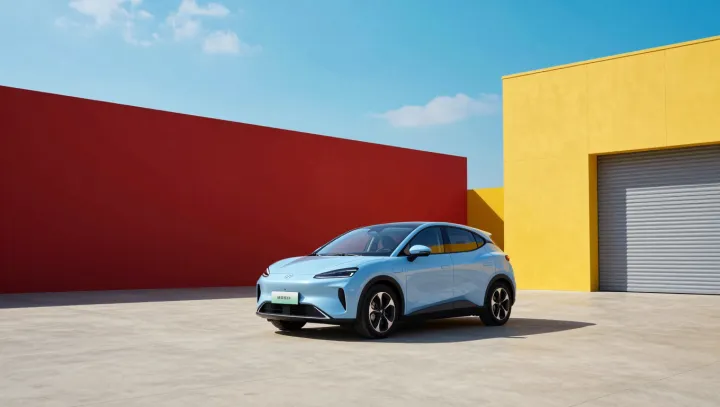
Pixel-like lamps and a boxy profile rarely survive the jump from concept stage to street-legal EV, yet this time the silhouette stayed intact. Underneath, the key shift was a dedicated electric platform rather than a converted combustion chassis, which fixed the long wheelbase, short overhangs and flat floor that defined the original proportions.
Engineers then treated aerodynamics as a margin-of-error problem, shaving drag coefficient with flush glazing, sealed body seams and carefully tuned underbody panels. That work offset the frontal area penalty of the upright posture. A high-energy‑density lithium-ion pack, managed through precise thermal management and a centralized battery management system, protected usable kilowatt-hours without demanding a swollen body or oversized wheels.
Because the skateboard layout separated crash structures from styling surfaces, homologation requirements did not erase the pixel theme or the sharp roofline. Wheel placement, cowl height and lighting modules were locked early as hard points in the vehicle architecture, so later changes focused on manufacturability and cost rather than a redesign of the stance. The result is a production EV that keeps its concept-car footprint while delivering range competitive with more conservative shapes.