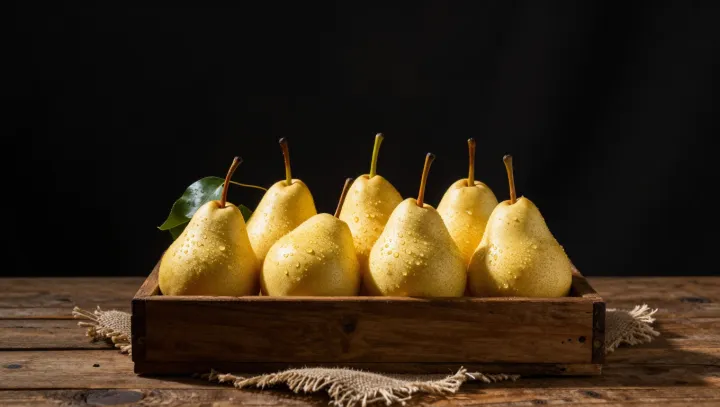
An ordinary-looking pear once entered imperial ritual as Jingbaili, a designated variety served to Empress Dowager Cixi before court. That name signaled terroir, seasonal scarcity and a clear hierarchy of access. The fruit moved through a tightly controlled supply chain where rarity and social distance created a kind of nutritional marginal utility long before economists named it.
Today the same species is flattened by industrial agriculture. Breeding programs optimize for shelf life, transport resilience and visual uniformity, not for distinctive cultivar identity. Cold-chain logistics and centralized procurement push orchards toward a narrow portfolio of high-yield clones, quietly increasing ecological entropy as lesser-known landraces disappear from commercial catalogs and from everyday language.
Supermarkets complete the erasure. Retail layouts label bins simply as pears, collapsing dozens of cultivars into one anonymous SKU, pruning away stories about origin and microclimate. Consumers, trained to scan price tags rather than variety names, no longer build a mental taxonomy of fruit. The Jingbaili survives mostly in archives and specialist collections, while most shoppers could not name even the cultivar they are biting into.